
After The Funding Round: Now Valued At $3 Billion, Stord Rolls Out New Physical Intelligence Lab.
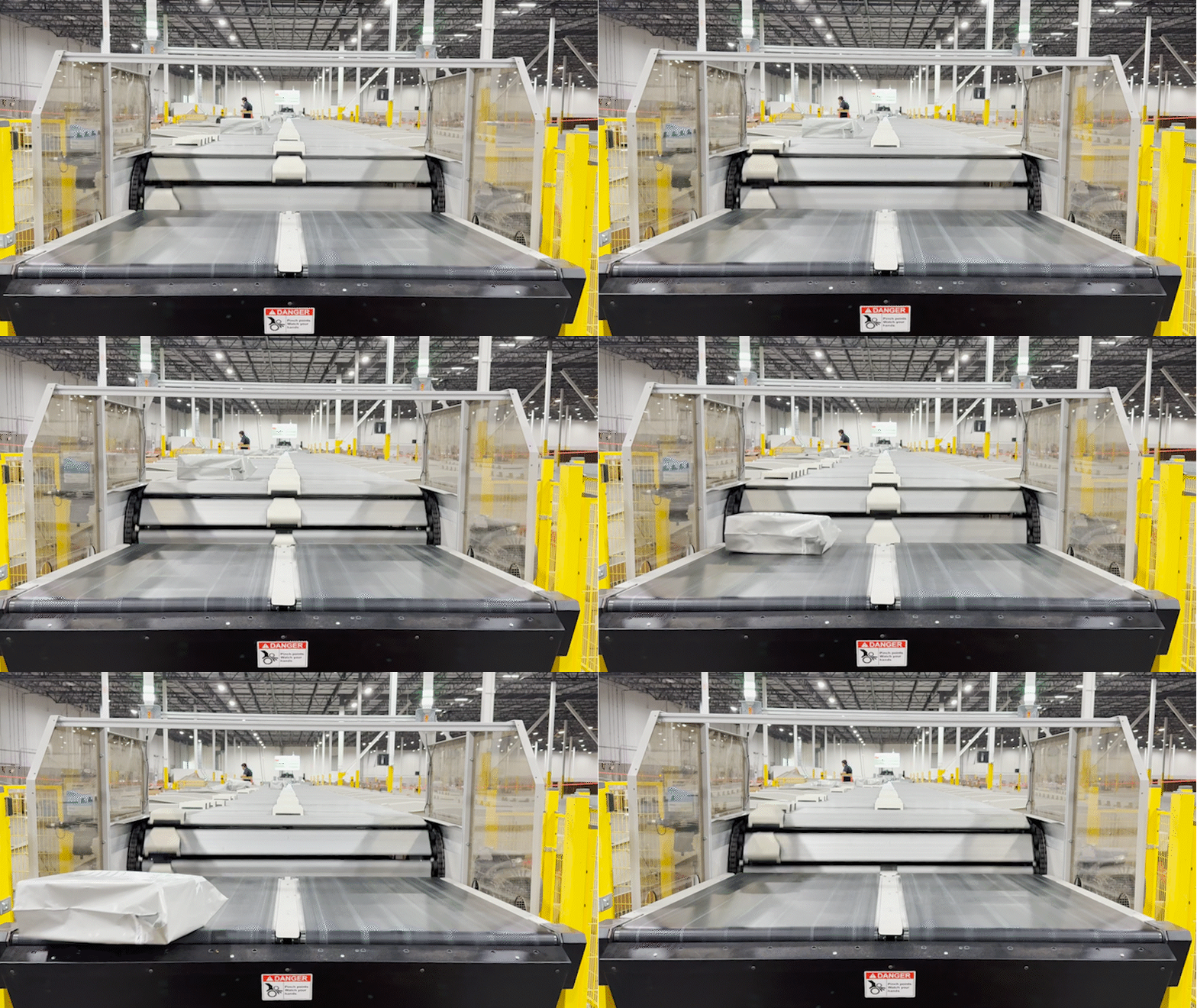

A decade ago, Hypepotamus wrote its first article about Stord, a new startup coming out of Georgia Tech, with its pitch for a storage solution. A year later, we wrote about the startup’s pivot to a warehousing industry.
Today, Stord is a pillar of the Atlanta tech industry, garnering backing from some of the top investment firms in the US and with over 100 facilities worldwide. The company is starting the summer off with the announcement it has closed a $250 million Series F funding round at a $3 billion valuation. The fundraise comes a year after Stord raised $200 million, in a mix of debt and equity.
This new Series F funding round’s investors include existing investors Strike Capital, Kleiner Perkins, Founders Fund, Franklin Templeton, Baillie Gifford, G Squared, Bond, and Lux, among others.
“Commerce infrastructure gets built once. From our earliest conversations with Sean Henry, it was clear Stord was assembling something rare: software, physical infrastructure, and AI combined in a way that turns fulfillment into a competitive advantage rather than a cost center,” John Lagomarsino of Strike Capital said in a press statement. “We believe the rise of agentic purchasing will increasingly favor platforms where software and physical operations are deeply integrated. Stord is building that infrastructure. That is why Strike is proud to deepen our partnership in this round.”
Behind Stord’s Growth
Stord reports 10x revenue growth over the last four years.
Over the last year, Stord has nearly doubled its engineering headcount while tripling product output, Steve Swan, Stord’s President and COO, told Hypepotamus.

“Two acquisitions drove significant expansion in the past year: Ware2Go, acquired from UPS, which added vetted U.S. partner facilities and technology capabilities at scale; and Shipwire, acquired from CEVA Logistics, which extended our global reach further. We also opened a new fulfillment center in Atlanta and acquired a Dallas-area facility from American Eagle Outfitters after the closure of Quiet Logistics, inheriting their customer base and team alongside it,” he added. “The physical footprint and the headcount tell the same story: Stord is building infrastructure at a pace that reflects genuine market demand, not capital deployment for its own sake.”
“What Performs, Deploys”
On top of the fundraising announcement, Stord said it is rolling out a Labs space at its Atlanta HQ.
In a video announcement, CEO and co-founder Sean Henry said that it was all about creating the “physical intelligence layer” for independent commerce. The Labs space will be where the company builds and validates agentic AI, robotics, and advanced automation against real orders. What is tested and validated in the physical lab can be deployed into Stord’s nearly 100 facilities around the world with no additional re-integration steps needed.
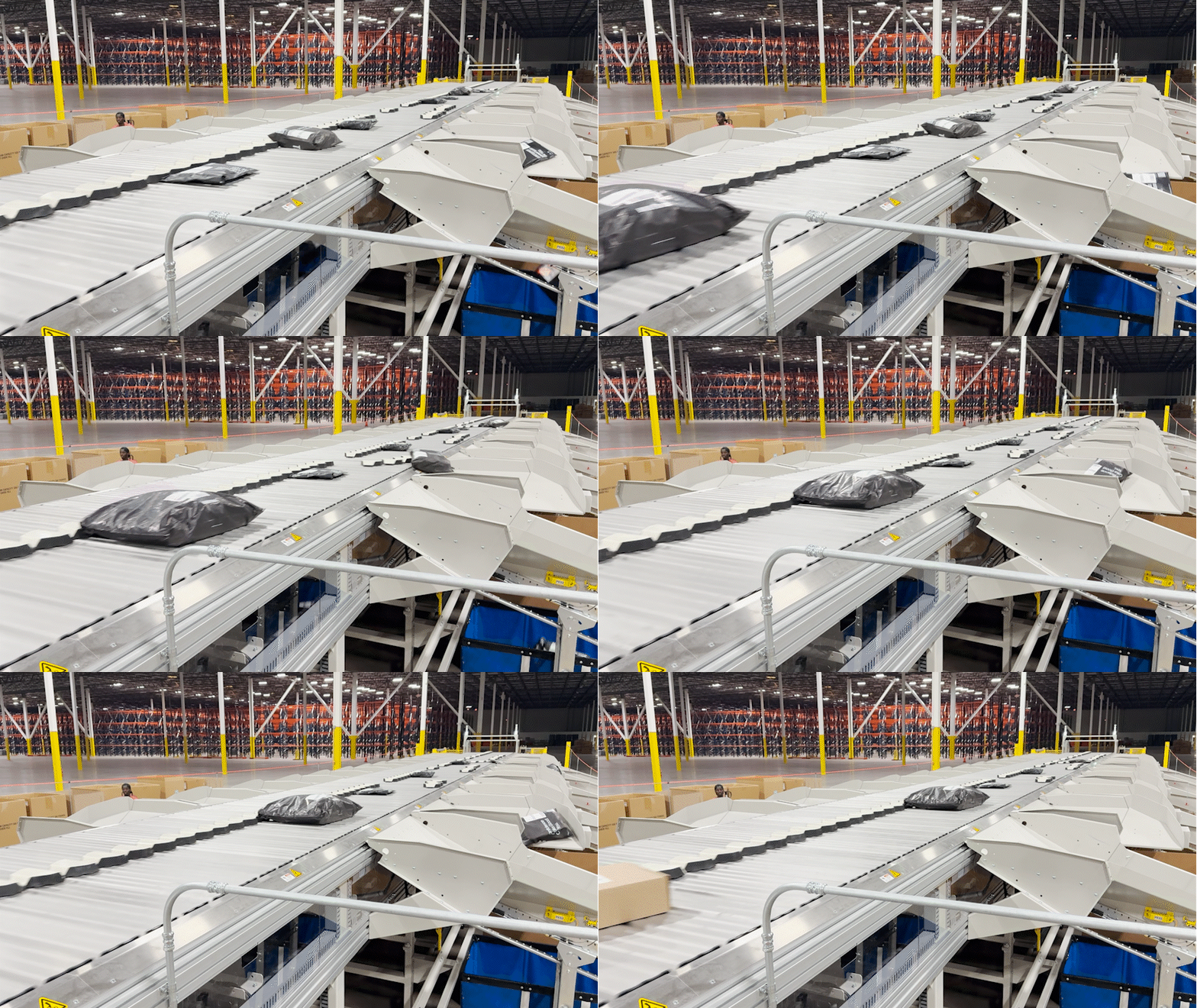
Stord Labs is a “living environment” that “replicates the full arc of modern fulfillment — receiving, storage, picking, packing, shipping, and returns,” Swan told Hypepotamus. “What performs, deploys. What doesn’t gets cut quickly. No prolonged pilots. No vendor-managed assessments. The data decides.”
“Stord Labs exists because the team recognized a constraint no one in independent commerce had solved: you cannot build physical intelligence in simulation,” Swan added. “The lesson behind that principle came from hard experience evaluating robotics and automation vendors. A system that runs cleanly in a controlled environment with a single product type and predictable order patterns can fail completely the moment it hits live operations. No demo environment replicates the variability of a real multi-client fulfillment operation: mixed SKU profiles, variable order sizes, seasonal demand swings, and the human stakes of real consumer orders. The only way to develop physical intelligence that actually works is to build it against the physical reality it will operate in.”
—GIFs provided by Stord



Comments ()