
Atlanta’s AI Commission Sends Its Recommendations To City Council. Here’s What Atlantans Need To Know.
Stay up to date with Hypepotamus
Add us as a preferred source in Google
Atlanta’s Artificial Intelligence Commission has wrapped its year-long work and is sending a set of recommendations and possible legislative changes to the Atlanta City Council that could shape how the city uses AI in government services, procurement, employee training, legal compliance, and workforce development.
So what does that mean for Atlantans? Well, it could shape the future of city services, public trust, workforce disruption, procurement, privacy, bias, cybersecurity, and government efficiency for local residents.
How Atlanta City Hall is preparing for AI
We spoke to the commission’s chair, Councilmember Matt Westmoreland, just ahead of the commission’s final meeting to learn more.

The Commission, which was composed of city officials, technologists, academics, and industry leaders, was originally established under former council member Amir Farokhi, who submitted legislation to convene the group in November of 2024. Westmoreland, who holds the Post 2 At-Large seat in City Council, took over as the chair of the commission shortly after Farokhi announced his resignation from City Council.
Westmoreland said that the Commission’s meetings were about learning “what is coming” around AI and “and how it can be helpful for residents” as well as City employees.
“I’m focused on making sure that AI can help make government more responsive to residents, more effective, more efficient…and how it can help with workforce preparedness,” Westmoreland told Hypepotamus. That last part is particularly important to Westmoreland, who previously taught in the Atlanta Public School system.
Over the past year, the commission heard from experts on how other cities are incorporating AI into government operations, from infrastructure planning to employee guidelines. Boston, for example, adopted AI use guidelines for city workers in 2023. The group also examined how AI could reshape procurement, what legal questions the city will need to address, and how Atlanta’s colleges, universities, and workforce programs can prepare residents for the changes ahead.
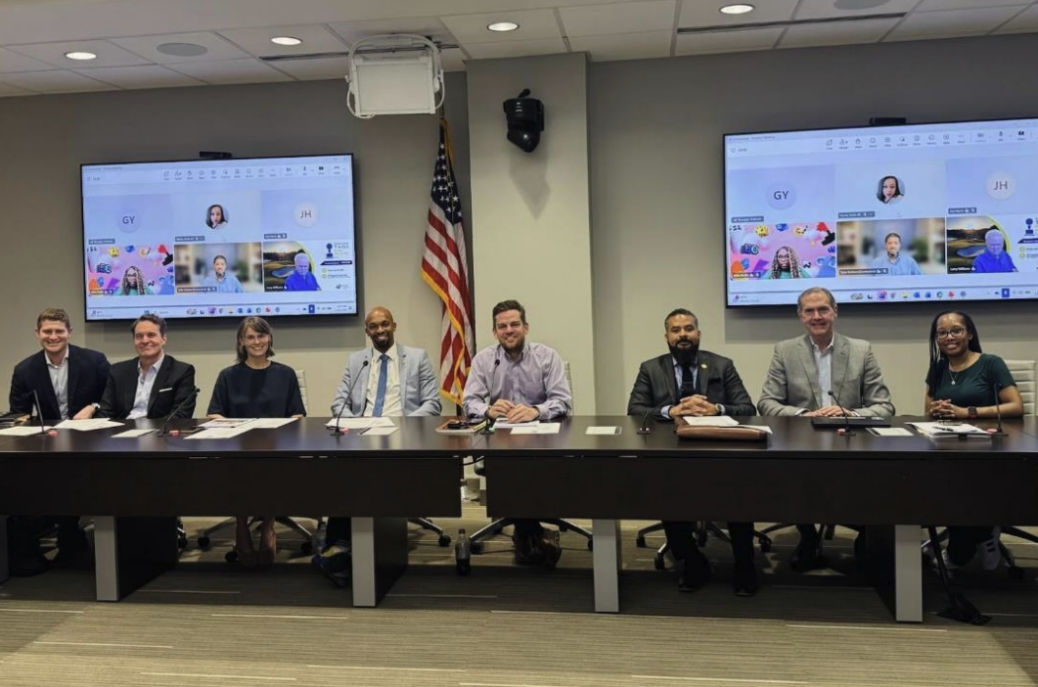
Joining Westmoreland on the commission included:
- Dr. Charlotte Alexander, Professor at Georgia Institute of Technology
- Donald Beamer, Jr., Senior Technology Advisor for the City of Atlanta Mayor’s Office
- Nikhil Despande, Chief Digital & Artificial Intelligence Officer at Georgia Technology Authority
- Mathew Garver, CEO of HiQo Solutions
- Dr. Joy Harris, Director of the Entrepreneurship and Innovation Institute at Georgia State University
- Dr. Brandeis Marshall, Founder & CEO of DataedX Group
- Jason Sankey, Chief Information Officer for the City of Atlanta
- Tyler Scriven, Co-Founder & CEO of Saltbox
- Erika Smith, Global Partnerships Lead at Microsoft
- Dr. Joseph Sutherland, Director of the Emory University Center for Artificial Intelligence Learning
- Larry Williams, President & CEO of the Technology Association of Georgia
- John Yates, Partner at Gunderson Dettmer
What happens next?
The Commission’s official recommendations focused on five areas moving forward: responsible AI use in city government, procurement, legal compliance, workforce readiness, and continued oversight. The goal, according to the commission’s work, is to balance AI innovation with “accountability, transparency, and the public interest.”
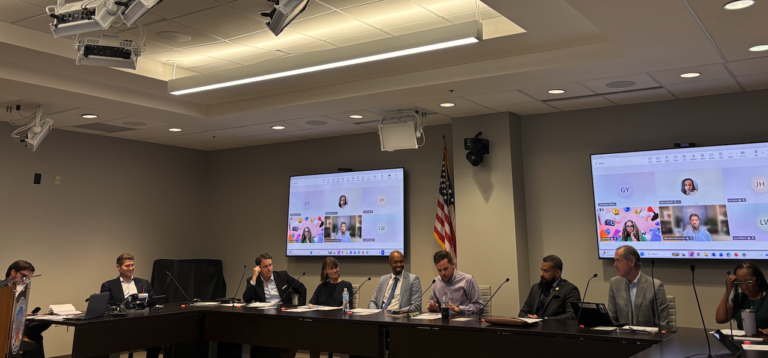
Following the adoption of its resolutions last week, the Commission will now submit its recommendations to the Atlanta City Council. If the legislation is approved, it will be voted on by the full Council in the coming weeks. Final Recommendations will also be available for the public to read here and upcoming City Council meetings where they will be discussed can be followed online on YouTube or ATL26.
While the Commission is sunsetting, Westmoreland said there is interest in standing up an advisory board that meets quarterly that will “help inform and guide future conversations” around AI in city government.



Comments ()