
These Metal Tags Could Make Smart Home Sensing Less Intrusive
Editor’s Note: This article was first published on Tech Square ATL and is brought to you by a content partnership.
Stay up to date with Hypepotamus
Add us as a preferred source in Google
In a typical smart home, intelligence comes at a cost. Cameras track movement. Sensors require batteries. Devices connect through fragmented systems that demand constant maintenance. TSRB researcher and PhD candidate Yibo Fu (Uncommon Sense Lab, Georgia Tech's School of Interactive Computing) is exploring a different model. One where everyday objects quietly signal their use without electronics, cameras, or friction added to daily life.
Fu and his collaborators’ system, called SoundOff, turns physical interaction into data using something most people will never hear: ultrasound.
Passive Tracking
At its core, SoundOff is built on the simple premise that every interaction with an object produces motion. That motion can produce sound. The question Fu asked was whether that sound could be engineered to carry information.
“Each shape has its own signature sound,” Fu explained.
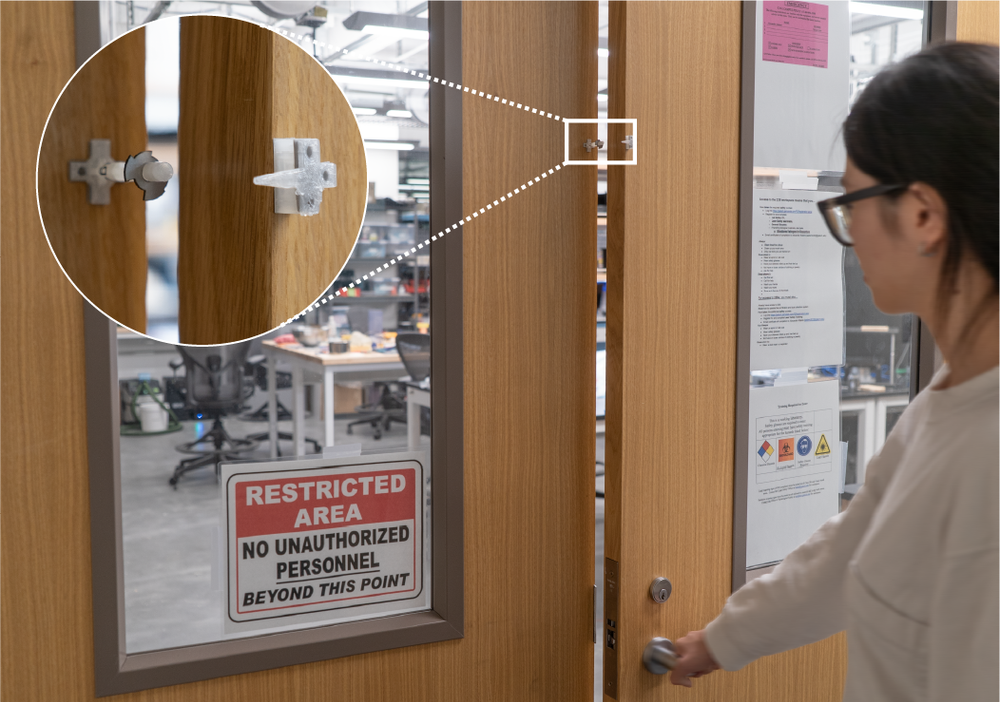
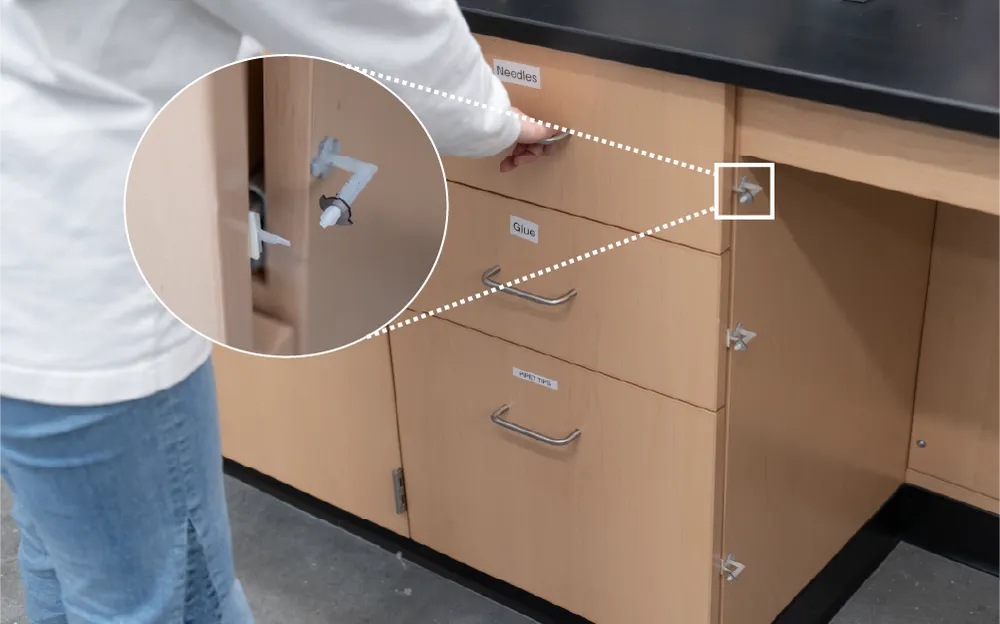
Instead of embedding sensors into devices, SoundOff attaches small, passive metal tags to objects like drawers, doors, or faucets. When someone interacts with that object, the tag is physically struck, producing a short ultrasonic signal above 20 kHz. Humans cannot hear it, but a nearby microphone can detect it clearly.
The result is a system that identifies actions not by watching or recording, but by recognizing distinct acoustic signatures tied to physical design.
This approach addresses a long-standing tension in smart environments. Systems need context about how people interact with their surroundings, but traditional methods often raise privacy concerns or require complex infrastructure. The SoundOff tags are completely passive with no batteries or circuitry. Just geometry and material.
Designing Sound Through Physics
What makes SoundOff viable is not just the idea of using sound, but how precisely that sound is engineered.
Each tag is made from stainless steel and cut into a specific shape. That shape determines how it vibrates when struck, and therefore what frequency it emits. Even small changes in geometry create distinct ultrasonic signatures.
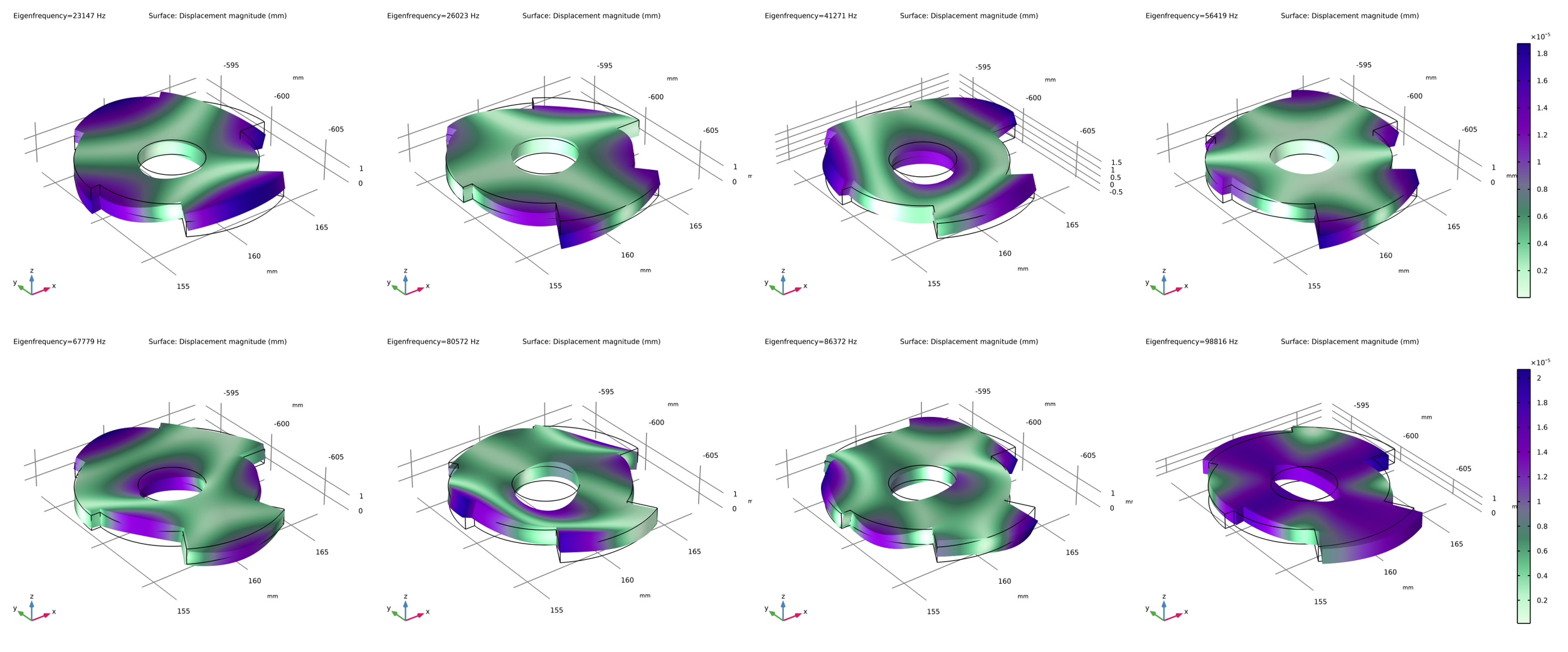
Fu and his collaborators built a physics-based modeling pipeline to design these tags. Rather than trial and error, they simulate thousands of possible geometries and predict their acoustic output in advance.
In one iteration, the team generated over 1,300 designs and used simulation tools to narrow them down to a set of uniquely distinguishable tags. This is where SoundOff departs from many modern sensing systems.
“We simplify the signal processing and intentionally avoid machine learning,” Fu notes.
Instead of training models, the system relies on the physical distinctiveness of each tag. A simple signal processing pipeline identifies frequency peaks and matches them to known signatures. No neural networks. No retraining when new tags are added.
What It Looks Like in Practice
SoundOff is not a conceptual system. It is designed around concrete use cases where object-level interaction matters.
In a home, a tag attached to a drawer can signal when it opens. A tag on a faucet can register water use. A tag on a toilet lid can indicate daily routines. This enables several applications.
Smart home automation becomes simpler. Instead of replacing devices, users can retrofit existing objects. Opening a door could trigger lights. Using a cabinet could update inventory systems.
Habit tracking is another layer. Because each interaction is tied to a specific object, the system can build a picture of daily routines without tracking identity or recording intelligible speech.
For elder care, the implications are more direct. Caregivers could monitor activity patterns without cameras. A missed sequence of interactions, such as not opening a medication drawer, could signal a need for intervention.
There are also broader possibilities in environmental awareness. Tags could detect usage patterns across shared spaces, offering insights into how buildings are used.
Constraints and What Comes Next
Despite its simplicity, SoundOff is not without limitations.
Ultrasound does not travel far. The system works best when the microphone is within about one meter of the interaction . That constraint currently requires either wearable microphones or dedicated devices placed within a room.
“The biggest constraint right now is the mic,” Fu said .
Future iterations may rely on embedded microphones in smartwatches or room-based hubs. Fu suggests a model where each room has a central listener, like a smart speaker, capable of capturing nearby interactions.
There is also ongoing work to improve tag design and extend sensing capabilities. Potential directions include combining acoustic signals with motion sensing or exploring ways to attribute interactions to specific users without compromising privacy.
SoundOff reframes what it means for a space to be “smart.”
Instead of layering intelligence through networks of powered devices, it distributes sensing into the physical environment itself. Objects remain what they are, but their interactions become legible. In that model, intelligence is not embedded in software or devices, but in material, motion, and design.



Comments ()