
Autolane Is Bringing Order to Autonomous Vehicle Parking Chaos — Starting at Atlanta's Lenox Square & Westside Provisions
Waymos Are Wreaking Havoc on Atlanta Parking Lots. Meet the Startup Cleaning Up the Mess.
Stay up to date with Hypepotamus
Add us as a preferred source in Google
As an Atlanta driver, there are few places that give me more personal anxiety than the parking lot at Lenox Square Mall. (The Home Depot Midtown lot and the Trader Joe’s parking lot are close contenders, though).
It's not just human drivers to blame anymore for parking frustrations. Autonomous vehicles (AVs) are already adding a new layer of chaos to Atlanta's most crowded lots.
While convenient for riders, AVs are already disrupting parking operations at places like Lenox Square Mall, dropping off passengers in inconvenient spots, clogging valet lanes, and creating bottlenecks for pedestrians and traffic alike. At Lenox, the situation had become acute enough that Simon Property Group, which runs the mall, called it an “emergency situation.”

Demand Science, a precision marketing-as-a-service solution, is trusted by over 900 leading companies. Learn why here.
To address the growing AV management challenge, Lenox is now one of the first properties in Atlanta to deploy technology from Bay Area-based startup Autolane, which has built a ride-hailing orchestration system designed to bring order to AV curbside chaos.
What Is Autolane, and How Does Its Smart Curbside System Work?
Autolane is a hardware and software startup building infrastructure to coordinate autonomous vehicles at retail and commercial properties, acting as a communication layer between AV companies and property owners.
Ben Seidl, the startup’s co-founder and CEO, told Hypepotamus that Autolane solves the “communication, coordination, and control” problems that arise when AVs interact with retail locations.

The core issue is that AV companies aren’t in direct communication with individual property owners. Each location has its own traffic plans and specific preferences for how vehicles should navigate their property. But autonomous vehicle companies aren't coordinating with every venue. And unlike human drivers, AVs can't read a hand-written sign, take a cue from a parking attendant, or make a judgment call based on context.
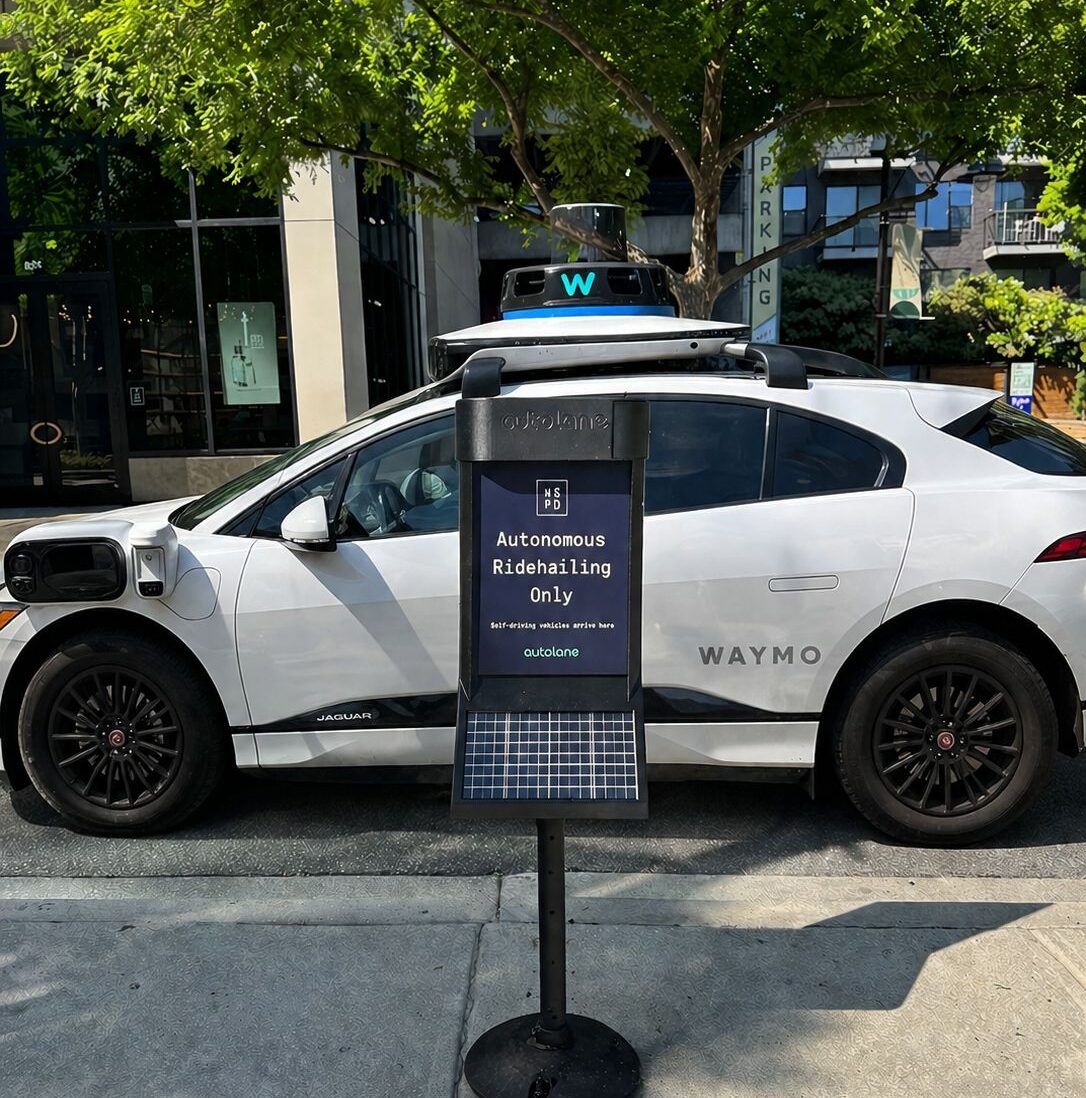
Autolane bridges that gap. Properties install an Autolane Smart Curbside Sign, which monitors AV activity in real time. The system uses LiDAR to guide AVs to precisely the right pickup and drop-off location at the right time, preventing them from blocking valet lanes, impeding traffic, or creating hazards for pedestrians. Property managers can also update pickup and drop-off zones on the fly to account for construction, events, or other changes to parking patterns.
Beyond managing day-to-day traffic, Autolane's data could help property owners make longer-term decisions about how to redesign their parking infrastructure for an AV-dominant future.
The hardware and software startup, which is backed by Draper Associates, LAUNCH, Hyperplane, and Feld Ventures, most recently raised a $7.4 million venture round in 2024, according to Crunchbase.
Atlanta's Growing Autonomous Vehicle Landscape
Since summer 2025, it’s been nearly impossible to travel though Atlanta’s urban core without seeing Waymos (available via Uber) ferrying commuters across town. Atlanta was an early launching pad for Waymos, and the city’s streets are poised to be filled with even more AV companies soon. Lyft’s May Mobility cars are already available, and Amazon’s Zoox currently testing in the city.
That growing AV presence is exactly why infrastructure startups like Autolane sees an opportunity in the city.
Today, Autolane’s services are available at Westside Provisions District in West Midtown and Lenox Square in Buckhead, with more locations in the pipeline.
After launching at Westside Provisions on April 21, the property saw 63 sessions in its first week. At Lenox Square, Autolane said its Smart Curbside Signs dropped AV-related parking lot disruptions from 30 to 40 daily to one or two every few weeks.
Building For The Self-Driving Delivery Future
Seidl came to the AV space after founding and building Neyborly, a California-based, venture-backed marketplace startup for short-term commercial real-estate. The startup helped major retail REITs (Real Estate Investment Trusts) activate their vacant storefronts for popups, events and meetings. He saw firsthand the operational headaches large retail properties faced and started thinking about what problems might be coming with the rise of AVs on the road.
For Seidl, the long-term opportunity for Autolane goes beyond ride-hailing orchestration. The startup will roll out autonomous delivery infrastructure for retail locations later this year, positioning Autolane as a foundational lawyer for how physical retail adapts to our self-driving future.
-Featured photo shows Autolane's technology at Westside Provisions in Atlanta
Comments ()