
General Catalyst Backs Atlanta and SF-Rooted Construction Startup With $13.8M Seed
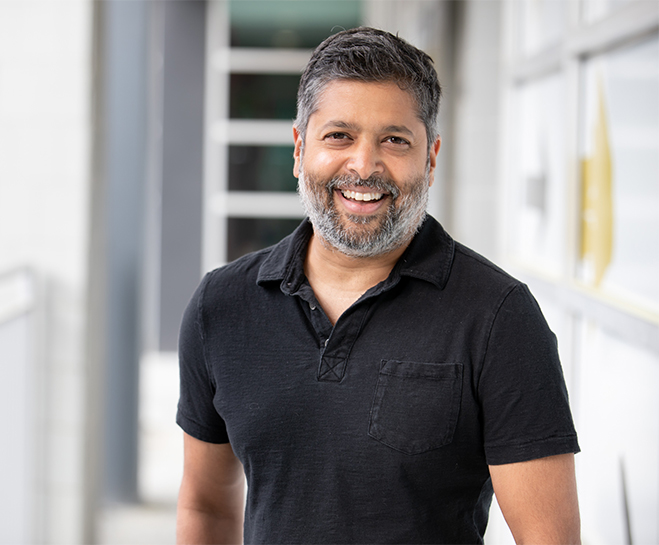
Atlanta-born, now San Francisco-based entrepreneur KP Reddy isn't interested in selling software to the construction industry. He wants to own it.
Zero RFI, an AI platform company from Atlanta-born, now San Francisco-based entrepreneur KP Reddy, just closed a $13.8 million seed round led by General Catalyst (the same firm that backed Canva, Hubspot, Ramp, Discord, Instacart, Anthropic, and Stripe). The raise is part of General Catalyst's broader AI roll-up strategy, a bet that the future of artificial intelligence isn't in selling software subscriptions, but in buying real businesses and rewiring them from the inside.
“At General Catalyst, we partner with founders to transform foundational industries with AI,” said Paul Kwan, Managing Director at General Catalyst, in a press release. “Zero RFI extends our AI roll-up strategy into the physical economy, applying AI not just to software workflows, but to how critical infrastructure is constructed.
Now, if you think that sounds like a private equity play, you would be right.
Reddy calls it a “new age private equity platform” where Zero RFI can invest and "build out a team and build transformative technology” to be used inside their portfolio companies.
"Change management is very easy when you own things," Reddy said.

The model is to acquire established companies with low multiples, deploy AI agents across their operations, and scale aggressively without ballooning (or, importantly, cutting) headcount. When acquiring companies, it is not about gutting teams down to skeleton crews, Reddy added. Instead, it is about arming the same number of people with tools powerful enough to do three times the work.
"The goal is to triple the business in three years — triple the revenue, triple the profitability," Reddy explained. "Let's triple the business with the same number of people."
Zero RFI's first acquisitions include Brookwood Group, an owner's representative services operator, a construction-closeout service provider BuildingWorks, and Reddy’s own AEC advisory firm KP Reddy Co.
Building in ATL & SF
Zero RFI is headquartered in both Atlanta and San Francisco by design.
Reddy, a Georgia Tech grad, relocated to San Francisco a year and a half ago to tap into what he calls a "consolidation of leading edge AI engineers."
"There's a different type of talent in the Bay Area and in Atlanta and we need to take advantage of both," Reddy said.
Atlanta’s office is home to CTO Barrett Clark (a veteran of Bright Mechanics, Greenzie, and SoftWear Automation) and a growing number of engineering team members. At a moment when computer science graduates…even from programs like Georgia Tech…are struggling to land jobs, Reddy says he wants to continue to hire strong young talent.
The Construction Problem
The global construction industry manages roughly $10 trillion in capital projects annually, yet the industry's productivity is continuously declining. McKinsey data puts the average construction project over budget by 80%.
Technology, counterintuitively, has made things worse in one specific way. It has multiplied the paperwork without solving the underlying chaos, as upwards of 150 entities are working on one construction project.
This leaves owners buried in notifications, emails, and change orders they have no real tools to process.
And that's the dirty secret of construction tech: Almost none of it is built for the people actually paying for the buildings. Architects bill more hours when projects drag. Contractors still get paid when budgets blow up. The owners (think the school district, the hospital system, and industries entities) absorb every cost overrun and schedule delay. Software options available today are designed to reduce risk for contractors, not owners.
Zero RFI is betting that flipping that equation and supporting the owners is where the real opportunity lives.

Comments ()