
What's In A Seed Round?

Want more tech stories in your inbox? Sign up for our newsletter to get the latest news from across the Southeast. Subscribe here.
What a difference a year makes. The early-stage funding landscape in 2025 shows that seed-stage deals are bigger, more competitive, and harder to secure. That creates a paradox reshaping what “early-stage” really means in the startup world.
The median seed round hit $3.8 million in Q3 2025. That is up from $3.1 million in the same period last year, according to PitchBook-NVCA. But this growth hides an important nuance: access to those rounds is narrowing.
"Stages continue to evolve, and metrics are in constant flux," says Sean O’Brien, Managing Partner at Atlanta-based Overline VC. "Today, the Seed stage resembles what Series A looked like a few years ago, while many Pre-Seed rounds are more similar to traditional Seed rounds.”
Back To The Future?
Despite the upward trend in round sizes, some investors are still seeing familiar patterns in the Southeast.
“It does fluctuate, but I feel very similar to seed rounds in 2019/early 2020 again,” says Tobi Walter, Partner at Cofounders Capital in Cary, North Carolina. “I just had a conversation [the other day] with an entrepreneur about the "SaaS Napkin" and how they change every year, but again, I feel at this point it's 'the usual' - have some revenue (below $1 million) and raise a couple mil (maybe less now than the last few years).”
The caveat? Overline’s O’Brien notes that "investors have become more selective, concentrating on high-performing startups with clear growth trajectories," which suggests that seed rounds are harder to close now In other words, the rounds are getting bigger, but they're also getting harder to close unless you're in the top tier.
What VCs Actually Want to See
If the definition of a seed stage company has shifted, what metrics are investors looking for right now?
Revenue matters, but context is everything, says Walter.
"We define a seed round (as opposed to a pre-seed) as 'at revenue’,” he told Hypepotamus. “For us it's usually roughly in the $50k-$1 million annual revenue mark, more often the $50k-$500k segment."
But revenue isn’t the only metric that will win a term sheet. Walter looks for go-to-market metrics like “sales activity levels, pipeline, sales cycles, ultimately realistic forecasts for the next couple quarters and good growth realistically in the next year.” The Cofounders Capital team also favors capital-efficient businesses, and typically those that have raised less than $1 million in outside capital.

“We may go up to a few million raised, but at some point too much raised (or debt on the books) becomes prohibitive.”
This year, Cofounders Capital led seed rounds into Florida-based Clockout and Charlotte-based Left Main REI.
Overline VC, which recently closed its $28 million Seed Fund II and has already written checks into twelve investments from that fund, looks for startups that have shown their customers have moved “beyond the free trial phase.”
For B2B companies, O’Brien added that Overline likes to see "the first 10 or more arms-length customers generating $25K to $50K in total MRR." Consumer-oriented businesses? Expect the bar to be higher.
Lisa Calhoun, Founding Managing Partner at Valor Ventures, said that at the seed stage, she is looking for founder-market fit.
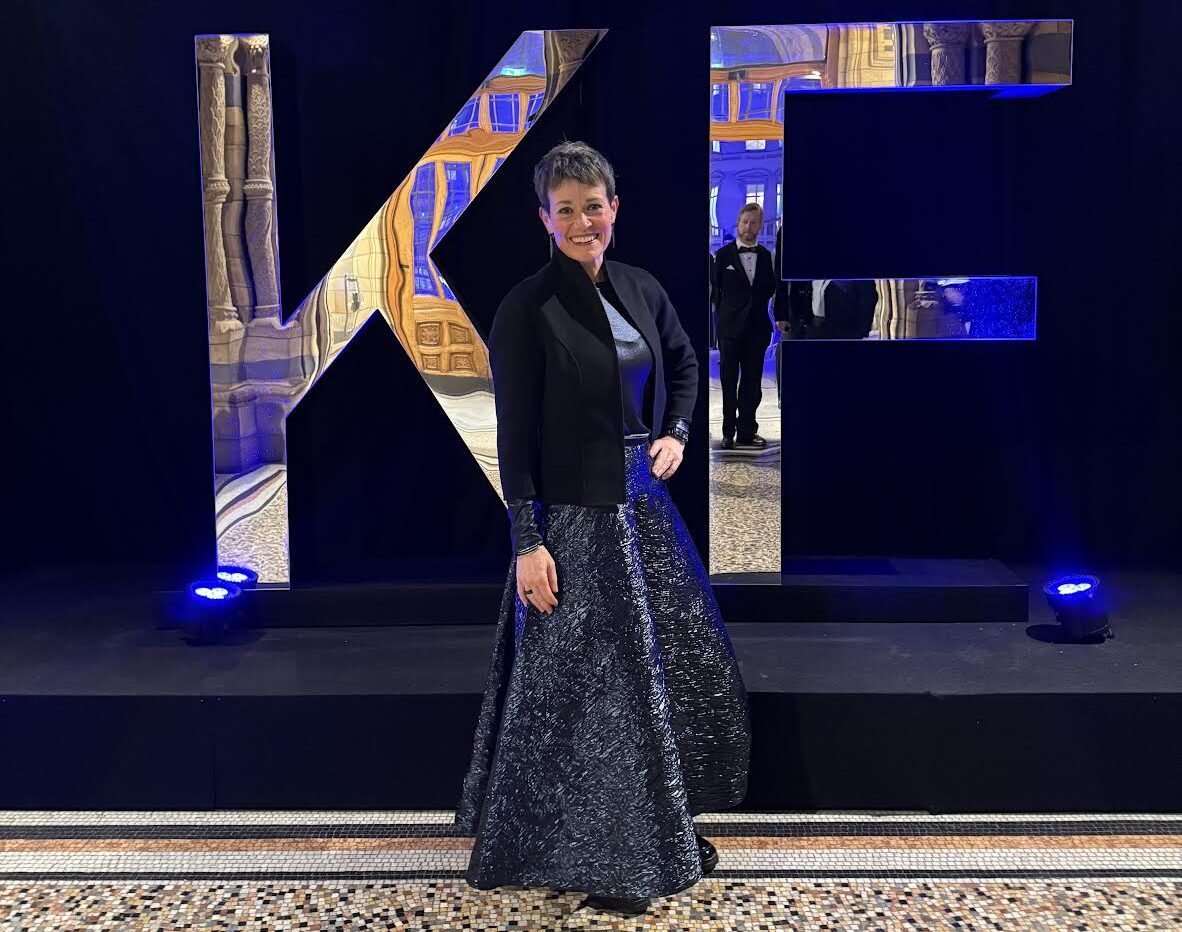
“In venture, people talk about ‘betting on the jockey or the horse.’ As a dressage competitor myself, I know the truth—it’s the connection between rider and horse that wins. In the same way, at the seed stage, it’s the connection between the entrepreneur and the market that drives early success. You can see that dynamic across our portfolio,” she told Hypepotamus.
Calhoun points to portfolio companies like Updraft, where founder Tim LaBelle's years advising CFOs informed his agentic AI fintech, and Visalaw AI, born from founder Josh Waddell's experience as COO at a leading immigration law firm. "At seed, product-market fit is still clarifying—but founder-market fit must be exceptional."
Check Sizes and Ownership
So what do deals look like these days for Southeast investors?
Walter says $2 million to $3 million is common in the Southeast. Cofounders Capital typically leads rounds with $1.5 million check.

O’Brien said that when Overline VC looks to lead a round, they target to be 50% of the round size (which generally translates to an Overline check between $1 million to $1.5 million.
“We continue to see new money in Seed rounds seeking around 20% ownership. Depending on the industry and business metrics, this can vary by a few percentage points in either direction,” O’Brien added.
Calhoun at Valor takes a different stance on the numbers game: "Round size varies, but discipline doesn't. We focus less on averages and more on alignment.”
When Calhoun reflected on the state of venture capital, she shared a perspective that neatly encapsulates the moment.
“Last night in London, at the 30th Anniversary of the Kauffman Fellows, our CEO, Fernando Fabre, said something I’ll never forget. 'Startups are about revolution. Venture capital is about evolution.'
He’s right. Venture evolves constantly—round labels and averages shift with the cycle. What matters more than defining a stage is knowing your lane and executing it with discipline.”


Comments ()