
The Southeast’s Next Competitive Edge: Human-Autonomy Teaming
In October 2024, 45,000 dockworkers shut down 36 ports across the East and Gulf Coasts—including Southeast hubs like Savannah, Charleston, and Mobile. For three days, operations halted. Vessels waited offshore. Cargo stalled. The economic impact was $5 billion daily. I watched this unfold with a particular lens—one shaped by years at the Army Research Laboratory charting research strategy for human-machine integration in complex, uncertain environments.
That military doctrine on integrated formations applies directly to what’s happening at ports. The military principle is simple: machines work best when integrated with human judgment, not when trying to replace it. Soldiers operate in constant change, complexity, and uncertainty—exactly the conditions where autonomous systems struggle most. What I saw in port automation is that same choice military strategists will face: fully automate human roles or realize the advantages of human-autonomy teaming.
Port operators wanted to deploy remote-controlled cranes, automated gates, and autonomous systems with minimal labor input. The International Longshoremen’s Association recognized that unilateral automation decisions would eliminate current roles without creating new ones. Neither side could force its approach. After a three-day strike and months of negotiation, they reached an agreement: modernization would include human expertise from the start. What this strike demonstrated applies beyond ports. When modernization includes human expertise from the start, evidence suggests systems perform better in complex environments.
Following that agreement, dockworker and maritime unions from more than 60 countries formed the Global Maritime Alliance in November 2025, pledging coordinated global strikes of 3-4 weeks if any company pursues implements automation without workforce input in procurement decisions at member ports. The alliance specifically targets autonomy purchases that don’t align with union demands around workforce stability and role transformation.
What Actually Changed
Port automation demonstrates a critical principle: workers understand how real operations work in ways that design specifications cannot capture. This insight becomes critical when systems built for ideal conditions encounter real-world complexity—as evidenced by automation’s actual performance record.
Automated terminals fall short of conventional facilities by 7-15% on throughput. McKinsey’s survey of automated terminal operators found productivity fell 35-40% short of initial projections. McKinsey’s survey of automated terminal operators found productivity fell 7-15%. Why? Equipment fails unexpectedly. Conditions change. The ILA-USMX contract established a Technology Committee with equal labor and management representation—seven workers, seven operators—that must jointly approve any autonomy before deployment. This isn’t obstruction. It’s operational expertise that can prevent billion-dollar mistakes before they happen.
From Modernization as Displacement to Modernization as Evolution
For decades, automation meant one thing: job loss. Workers fought it. Companies wanted it. This contract breaks that pattern by maintaining total workforce hours for union members while deploying new technology. Jobs don’t disappear; they evolve. Equipment vendors responded by designing technology for labor-compatible operations. Konecranes is one example of forward-thinking. They designed automation systems where operators remain essential to operations.
What This Reveals About Competitive Modernization
The port agreement demonstrates resilient human-autonomy teaming. Machines excel at routine work; humans excel at handling surprises. Workers influence which autonomy systems get purchased, provide real-time operational input, and create feedback that vendors use to evolve system design. The future isn’t less human. It’s built on integrated human and machine expertise rather than automation alone.
The port agreement advances one critical dimension: it enables workforce participation in technology decisions. This creates the conditions where human expertise can shape design and where real-time adaptation becomes possible through operator involvement. The other dimensions—trust calibration and human-centric design—require ongoing attention beyond governance structures. For organizations in complex operational environments, this matters. You can’t succeed by procuring automation systems without understanding workforce requirements. You have to find approaches that integrate workforce expertise with technology strategy.
The Global Maritime Alliance signals this isn’t a one-port phenomenon. It’s the framework unions are committing to as they negotiate modernization globally.
What Becomes Possible
The port industry’s choice reveals what Southeast innovation ecosystems need to build on. Ecosystems like the Savannah Harbor Innovation Partnership can lead by providing coordinated support for organizations implementing modernization strategies that integrate human expertise. When organizations integrate workforce into technology decisions, vendors respond differently. They start designing for labor-compatible operations. Kalmar launched “Automation as a Service,” allowing terminal operators to test systems virtually before physical deployment. When organizations commit to workforce stability, new service markets emerge. Companies can now offer training for human-autonomy teams, help redesign jobs to leverage what humans do best, and build governance structures that keep humans central to decisions as technology evolves.
Most importantly: organizations modernizing need ecosystem support. They need frameworks for collaborative decision-making. They need case studies and best practices. They need vendor intelligence. Southeast innovation ecosystems providing this support will gain competitive advantage. Ecosystems that recognize this—that pivot toward labor-inclusive innovation coordination—will become regional assets. Early-movers in this coordination will attract organizations seeking guidance, vendors seeking market intelligence, and investors seeking opportunities.
Here’s what the port agreement signals: labor and innovation aren’t inherently opposed. The real opportunity lies in designing modernization around new worker roles—not fighting automation, but shaping it. Organizations that see workers as partners in designing those roles will lead. The most dynamic businesses over the next decade won’t be those that automate fastest. They’ll be those that innovate best alongside their workforce. The ILA-port operator negotiation shows how this works operationally. It’s a case study in building competitive advantage by treating workers as essential to navigating the rise of intelligent autonomous systems. What becomes possible when we design modernization this way—around human expertise and new roles, rather than against labor? That’s the question defining the future of work.
About the Author
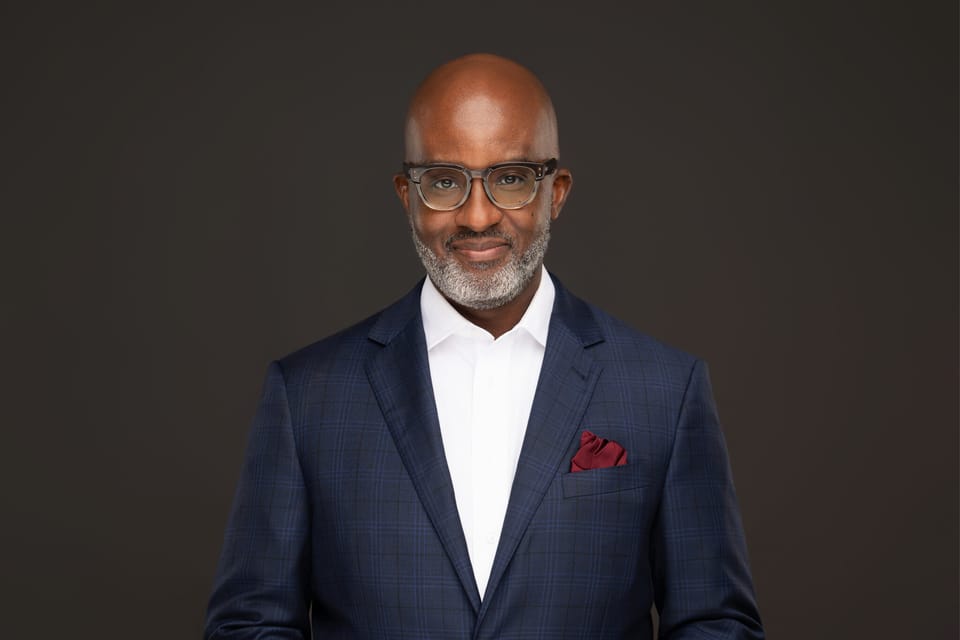
Frederick D. Gregory, PhD is Managing Principal and Founder of Kumenya Enterprises LLC, a consulting practice specializing in modernization strategy, change management, and AI readiness for organizations navigating human-autonomy integration.
He spent over 12 years at the Army Research Laboratory in senior research leadership roles directing $400M+ in research portfolios across biotechnology, AI, human factors, and human-machine teaming. As Branch Chief of the Humans in Complex Systems portfolio, he secured $55M in new Congressional appropriations while advising senior Army, Air Force, and international defense officials on human performance and technology integration strategy. He served as the first investor in foundational neurotechnology research leading to companies like Neuralink and holds a PhD in Neurobiology from UCLA. His current advisory roles include board positions with Metanoia Systems, MetaPilot Academy, and Georgia Southern University Research Foundation, where he focuses on technology governance, workforce development, and the future of work.



Comments ()