
Robin Knows Launches as an AI Platform to Bridge the Digital Divide

In the early days of ChatGPT, AI seemed like an unstoppable force, with tech moguls like Elon Musk warning that the technology would advance faster than humans could control.
However, early AI adopters, brothers Nate and Tyler Johnson, alongside C. Eliott Johnston, imagined that AI could be used for good.
As founders of the Tennessee-based augmented reality company Triptych, they leverage AI as a catalyst for generating ideas while understanding that technology is only as good as the people behind it.
They’ve joined a growing list of tech companies that refuse to lay off employees because of AI. And, through their new product, Robin Knows, they’re taking the pledge one step further by using AI to protect vulnerable groups from online scams and bridge technology gaps for older adults.
“We see AI, in both business and in our personal lives, as a tool to help people be more human and more creative,” said Nate Johnson, partner and CCO at Triptych. “We don’t want to supplant what makes us human. But if AI can solve real problems like fraud and tech issues, that’s a great role for it."
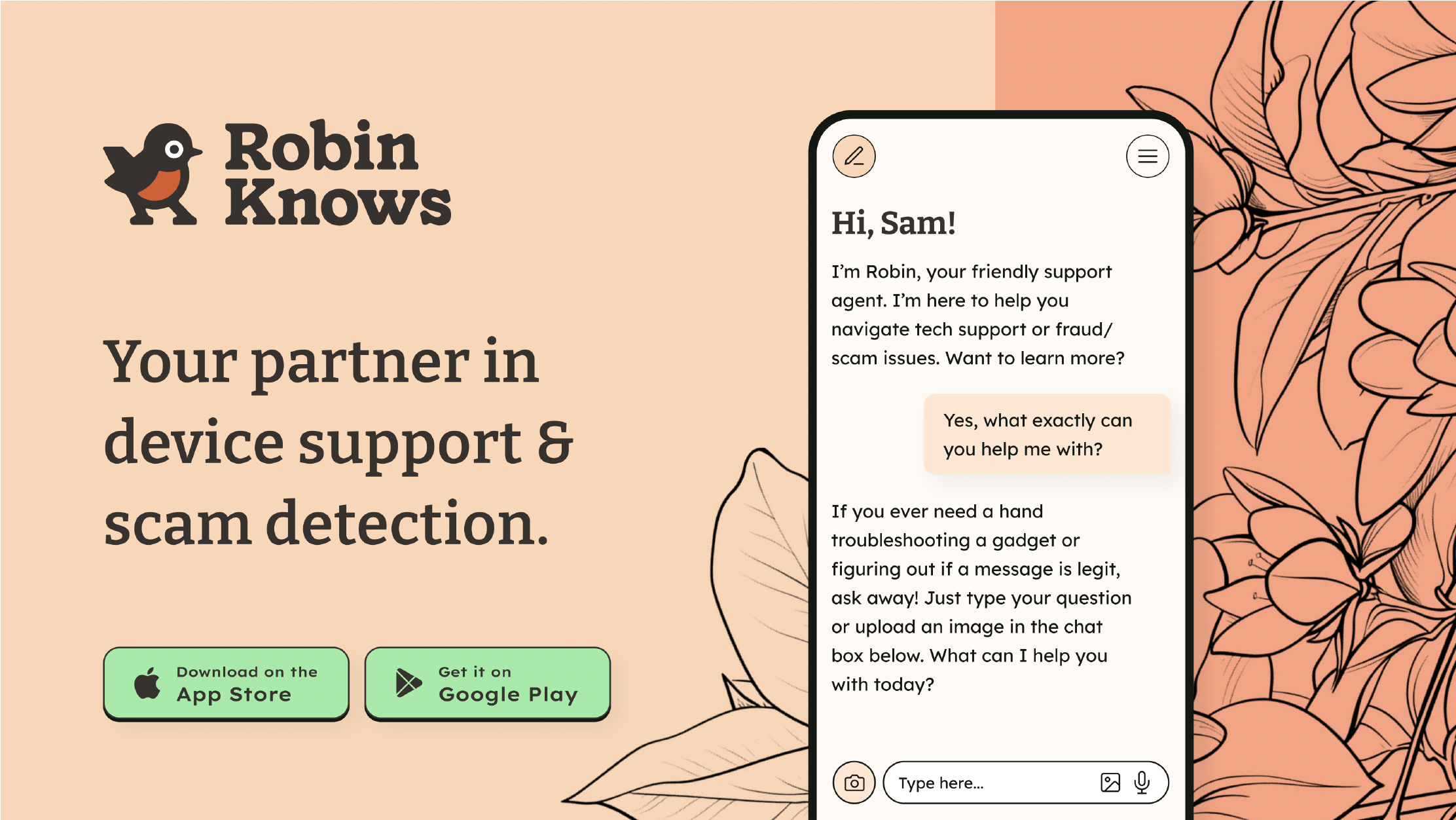
Launched in July, Robin Knows uses OpenAI’s language learning model to spot potential red flags in emails and troubleshoot tech issues.
The founders, all in their 40s, were inspired to launch the app from shared experiences of helping their aging parents navigate emerging technologies.
They sought a way to mitigate the embarrassment felt by many people over 50 when asking for help with tech-related tasks, and the uncertainty these adults experience when navigating potential scams.
“Our older generations are the technologists of a different era. They invented telecoms and gave us the space age,” Johnston, CSO of Triptych and acting CEO of Robin Knows said.
“It can be embarrassing for them to admit they don’t know how to navigate a new device or know if something is a scam. The core concept behind Robin Knows is to unlock the ability for them to say, ‘I feel empowered again to participate in this culture.’”
Marty Poe, an early app adopter aged 61, is seeing some of the benefits. Since the app’s launch, he’s been able to remedy audio issues with his computer and even tested the app’s ability by asking it how to install a car stereo.
“It was very matter of fact in saying, ‘here are steps one, two, and three.’ I thought that was very helpful,” Poe said. “Technology has to solve a problem or else it’s doomed. In this case, Robin Knows actually solved my problem.”
While platforms like ChatGPT or Microsoft’s Copilot are designed to produce immediate answers, Robin Knows begins conversations by asking questions about the hardware and software before delivering instructions. This allows it to understand users’ digital literacy levels and offer solutions according to their abilities.

“The reason a family member comes to me to ask for tech support is because I understand their ecosystem. I’m familiar with their devices and can understand the nuances,” Tyler Johnson, partner and CTO at Triptych said.
“Robin Knows does a really good job of understanding tech ecosystems by asking questions and allowing people to add their devices. It’s then able to take that knowledge and apply it to answering questions in a format that’s short and concise.”
On the scam protection side, the app’s founders hope to curb instances of fraud in those over 50 – a national issue which, according to the FBI, saw a record $12.5 billion in reported losses last year.
Using the scam analysis tool, subscribers can enter raw text, photos, or screenshots to make informed decisions on potential fraud.
The app also aims to educate subscribers on the content and structure of scam-based communications, fostering a more vigilant subscriber base and encouraging users to take that extra step before submitting personal information.
Together, these two functions serve as a double-sided approach to empower older adults with the confidence to safely navigate the digital world.
Moving forward, the company hopes the app will have larger applications in protecting businesses from fraud and aiding their tech support.
All while continuing their mission of building technologies that help people thrive.
“When people talk about using AI to replace human labor, that’s where it becomes problematic,” Johnston said.
“From our standpoint, AI does a really great job of aggregating massive data sets. We’re using its understanding of technical intricacies to solve problems. That’s the direction where AI is going to be really helpful.”

--
About The Author: Abdiel Vallejo-Lopez is a writer based in Chattanooga, Tennessee. He covers economic development and tech in the Southeast. Read his stories on LinkedIn and MuckRack.



Comments ()