
How This CEO Channeled Her Experience Recovering From Paralysis to Build A Care Platform
"You talk about solving this big problem; why don't you just go do it?" a Vanderbilt professor told entrepreneur Jessica Harthcock. That problem came out of Harthcock's personal experience pursuing recovery following a gymnastics-induced spinal injury at age 17 that left her paralyzed from the chest down.
"I wasn't given any chance of recovery," says Harthcock.
"I started traveling around the country, going to hospitals all over trying to find some type of resource that might be able to help me. The biggest problem in my recovery was there is no true post-acute standard of care. Everywhere I went someone would use a different type of therapy or technique with a different piece of equipment. No one should have to move all over the country to get to the resources they need," says Harthcock.
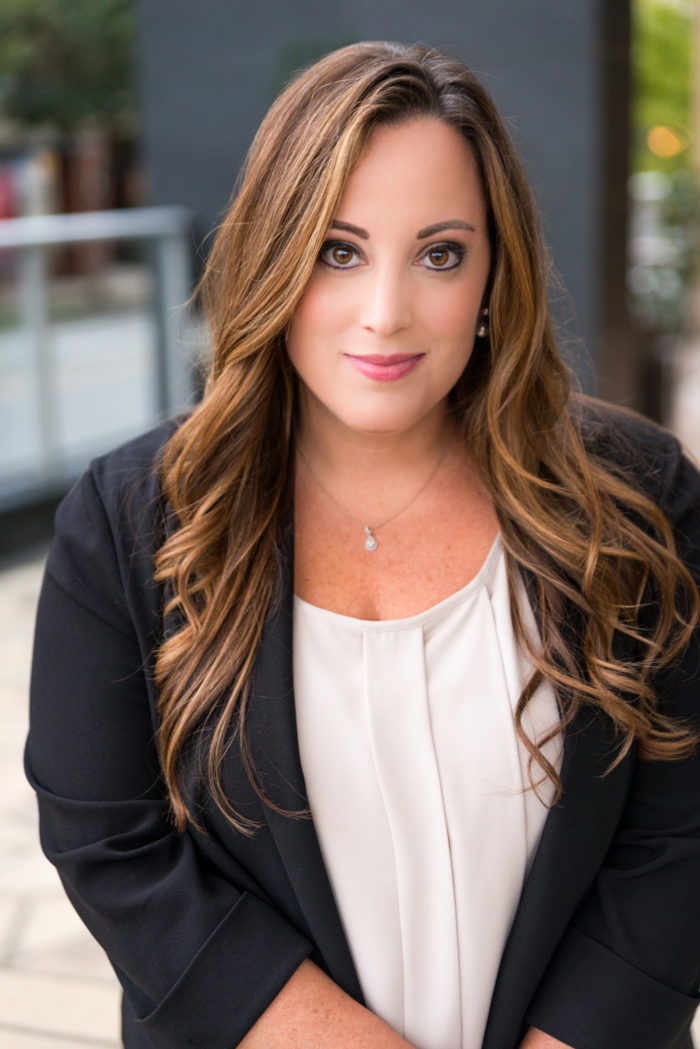
Following trial and error and traveling for six years seeking treatment, Harthcock was able to start walking unassisted. She realized that expert resources for post-acute recovery should be more readily available for those that aren't able to move around at a whim.
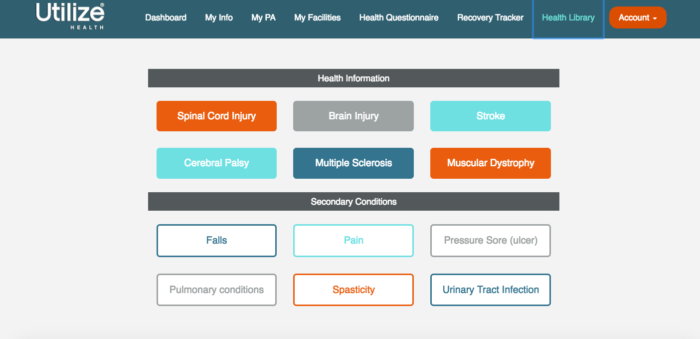
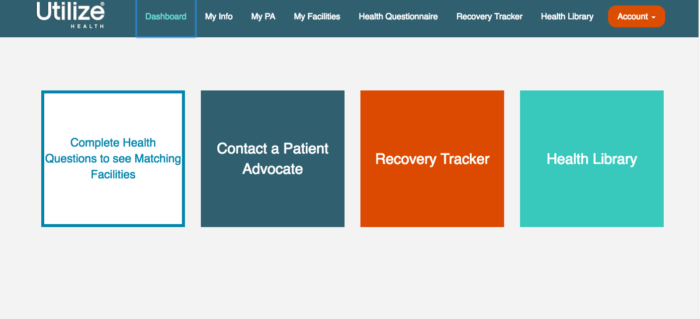
Harthcock and her husband decided to create Utilize Health, a platform that connects patients with neurological injuries with available therapies and facilities. "The first piece of my recovery was getting to the right resources and knowing where to go to get them," says Harthcock. "That has been a huge gap that we've solved."
Here, the Nashville-based founder shares more about building her company to serve those patients who require expensive care, focusing on the right customer, and why the southeast is the right place to grow her medtech company.
What's Utilize Health's pitch?
We've created a tech-enabled platform that can connect and help patients find the most appropriate place and level of care for their injury with the right equipment and therapy modalities. Patients with neurological conditions are very expensive to care for because we have a lot of unfortunate complications. But if they're managed correctly and you give these people someone that knows how to help them, it's amazing how much healthier they can become.
We use the phrase "maximize their potential for recovery." Patients are able to get to this maximum they didn't even know existed and in turn, that saves the health plan a lot of money. So in that regard we actually take risks on our fees and we guarantee an ROI onto a plan because we have enough data to be able to do that.
You provide your own health plan for clients. How does that work?
We identify the health plan's members and then we're going to put them in our care management program — for the next year we're going to care for these members like their COPD programs, palliative care programs, and become their advocate. We assign them patient advocates who are clinicians that have at least eight years of neuro-rehab experience in a multitude of care settings.
They are the one point on the care team that makes sure every doctor this person is getting the most appropriate and up-to-date information. If there's a complication, we'll call a doctor and try to get them. If not, we find another route. This equates to a much better quality of life and a massive cost savings for our health plans that we work with.
While you were your own ideal customer, as you started scaling your product, how did you find market fit?
When I was still a grad student at Vanderbilt, I surveyed 3,000 patients and their caregivers to see what they wanted in a product. They mentioned wanting to see recovery resources, a variety of options and easy access.
Thanks to press upon launch, we instantly had hundreds of people on a waitlist from across the country. It was a great opportunity to understand what these members need. That's actually how the patient advocate program was developed since they were asking for both recovery resources but also day-to-day support with grocery delivery, phone calls and transportation. It's amazing what a snowball effect that can have on the members that we serve.
What's your funding status?
We have raised $3.2 million to date, and we are actually getting ready to go after a series A round of about $3 million. We hope to leverage the Series A to grow primarily. We're always adding on more scalable technology, and a lot of that growth comes from human capital so we need funds to hire more individuals.
Why did you decide to grow your startup in the Southeast?
Our company is headquartered in Nashville and as a tech-enabled healthcare company, it's one of the best places to raise funding. Nashville gets healthcare. Being surrounded by those types of people who understand healthcare and the investors here, I think it gives us an edge on raising funds.
I don't care who you talk to in healthcare, we all want to help people. So having that social impact, I think it aligns well with the values of our company and how we want to be built long term.
What are some leadership lessons that you've learned so far as a founder?
The first one is know your company's identity and yours as a founder. It took us a little longer to learn that because this is my first startup, but I felt like we have incredible advisors and they'd always say "you're the expert in the room." At the end of the day I know this industry, this narrow niche that we're solving for, I know it better than anybody else.
Staying focused is another big thing — there have been so many leads we could have chased, or when something new comes out, we could have added that technology. But we're staying focused on what our customers need and what will best help serve the patient. It can be challenging, but knowing how we'll impact and deliver value to both of our stakeholders overall is important.
Comments ()