
This Atlanta Startup Is Using Bluetooth Beacons to Help the Blind Navigate The World
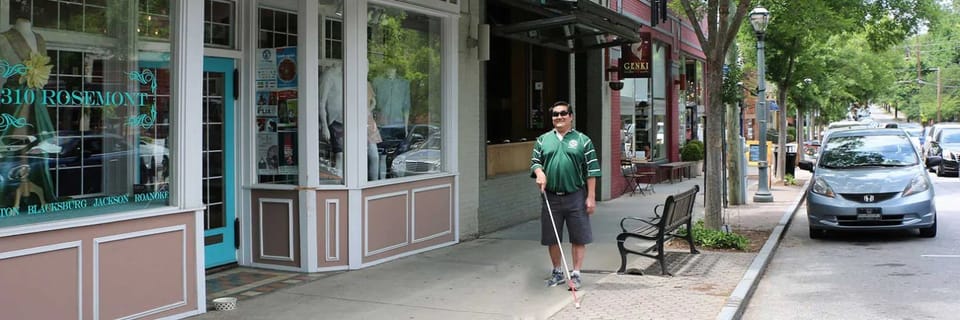
What’s the first thing you do when you head to a coffee shop?
Those with full vision will scan the room and try to find the counter to put in an order with the barista. But for those who are visually impaired, that journey to the counter isn’t necessarily straight forward.
Getting there requires first successfully navigating from the car, the sidewalk, and opening the right door.
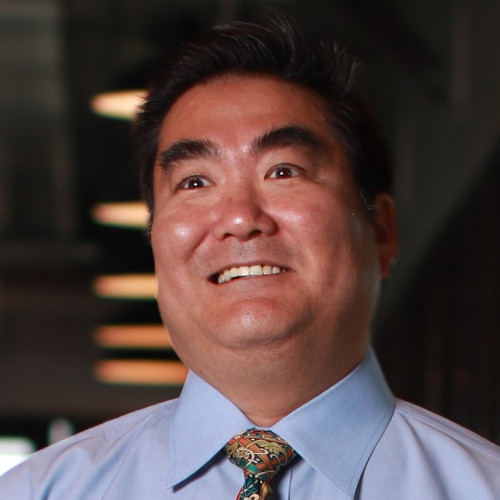
“When the Uber driver drops me off at the curb, that distance from the curb to your doorway, which is about, usually about 30 to 50 feet, is no man's land to a blind person,” said David Furukawa, who lost his vision due to retinitis pigmentosa. “GPS, as great as it is, has a lot of limitations,” he added, since it cannot help those with visual limitations navigate directly to the correct door or to the exact right spot within a building, like a counter or a desk.
Furukawa and his team are looking to make that journey easier with Hear2There, an Atlanta-based startup now building in ATDC. The startup uses strategically placed Bluetooth beacons and its own app to improve both indoor and outdoor navigation for the blind and visually impaired individuals.
Inside Hear2There's Technology
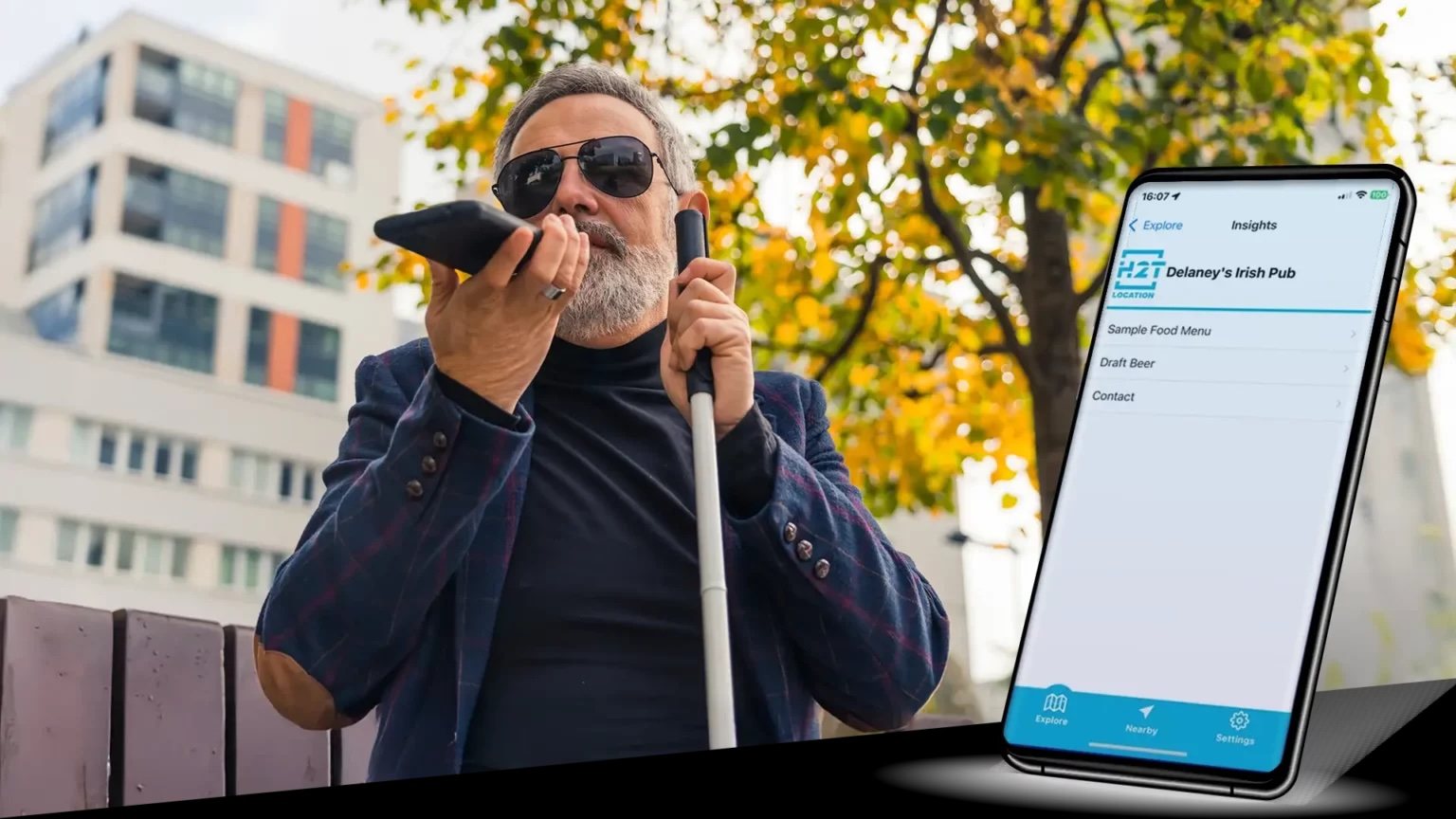
Essentially, the startup creates an “audio sign” and projects augmented information that a user can use to gather important information about how to get to a specific location. A coffee shop may set up Hear2There’s system to give users detailed information about how exactly to find their door and get to the counter. A hotel might use the technology to help a user find their elevator and exact room. Inside a restroom, the startup can give detailed information about where the soap and towels are exactly sitting.
It also helps stores provide as much crucial data as they want without having to rely on braille signs.
“As a business owner, you could put contact information or your hours of operation,” Furukawa added. “You could even put the menu, what services you offer…or directions to the bathroom.”
The goal is to help bring more independence to the lives of those living with low and no vision.
“We, the disabled, want to be able to do things as much by ourselves as possible, without having to ask for assistance.” Furukawa added.
Building Atlanta’s Accessible Tech Scene
Hypepotamus previously spoke to the Hear2There team (previously known as Foresight AR) in 2018, as the startup was getting off the ground and figuring out its target markets. The core team has changed over the years, but Furukawa and co-founder Chris Webb are still leading the company. The two recently went through the American Technology Ventures Lab, a program based in Spartanburg, South Carolina and founded by Atlanta technology legend Dennis C. Hayes. It was through the Lab that Furukawa and Webb met Kerry Krause, who joined as the startup’s CMO.
Since launching, the team has found fertile ground in several different sectors, particularly as governments look to embrace Smart City technologies to improve constituents’ lives and wellbeing.
“We've done a lot of use case testing in all different types of environments, whether it's in small businesses, municipal governments, public transit, bus stops, bus stations, hospitals, clinics — and even on an ocean cruise liner,” Furukawa added.
What's Next For Hear2There
Hear2There’s technology is currently being used in seven of the City of Decatur’s municipal buildings, including City Hall, the police department, and several recreational centers. The startup is currently working on expanding its footprint throughout the city, Furukawa told Hypepotamus. It has also expanded its reach to Newton, Massachusetts, Denver, Colorado, and Austin, Texas, where Hear2There's technology is being integrated into local schools for the blind, government buildings, and nearby businesses.
The team was recently accepted into ATDC, Georgia’s state of Georgia's technology startup incubator located in Midtown, and is in expansion mode. The team will be sponsoring and exhibiting at the National ADA Symposium, which will take place in Atlanta in the middle of June.
As Hear2There expands, the team is also using its platform to advocate for the blind and visually impaired community.
“The only real mandate that the government enforces is that you have to provide braille tags in public spaces. The problem is that 90 percent of the population that have a visual impairment don't know braille,” Furukawa added. But he sees beacon technology as a way to make the world actually more accessible to people with all different levels of vision.

Comments ()