
Get To Know The CEO Building What's Next In Checkpoint Security
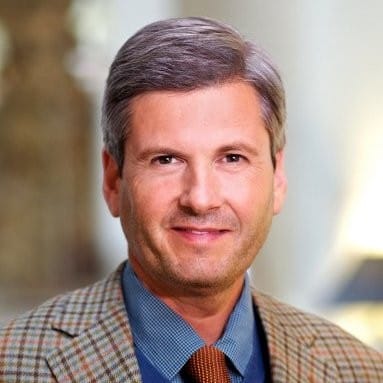
Physical security is getting an AI upgrade, thanks to Birmingham, Alabama-based Analytical AI. The startup, founded in 2019, looks to secure airports and checkpoints.
The team has captured the attention of the United States’ Customs and Border Protection and has been scaling through seed funding and startup-focused grants.
As the team grows, Mark Froehlich, Analytical AI’s CEO, walked us through how the technology company got off the ground and how it thinks about building technology. For the latest in our “Get To Know The CEO” series, Froehlich answered our questions in this fun and informative Q&A. Get to know a bit more about Froehlich and Analytical AI here:

Question: Take us back to the origin of the company. What was missing in the threat detection space that made you want to build this business?
The first thing that was missing in the threat detection space was consistency in personal detection at airports. The false alarm rate for on-person body screening)with Transportation Security Administration (TSA) systems was very high when we started. The TSA was looking for new alternatives to improve the detection rate, and we were selected from a national competition as the quickest solution in the market. Our imaging and detection took around two seconds, while others took minutes.
How did your founding team come together?
Our team at Analytical AI actually came together at the University of Alabama-Birmingham (UAB) using AI to detect strokes. I joined the team when they stepped away from UAB and looked to form their own company. I had a business background, while they had the technical acumen to create a great product.
AI is certainly the buzzword in technology. How do you stand out as an AI-first company?
We stand out by our results. We have a specialty that is all we do, and we do it very well. Our results are very reliable, and we understand that our product cannot have an error rate of any material size. For example, people passing through TSA checkpoints don’t want to be unnecessarily stopped any more than a TSA agent wants to pull someone out of line and perform searches. With our solution, that is kept to a minimum.
Can you talk on a high-level about your work with Customs and Border Protection? How has that contract impacted your business?
All I’m allowed to say is that we’re assisting Customs and Border Protection with narcotics detection. This is the biggest contract we’ve ever had, accelerating our growth tremendously. We wouldn’t have been able to do this without the supplemental SBIR/STTR funding we received earlier this year from Innovate Alabama’s Supplemental Grant Program.
Is your technology live right now in any places?
We are currently set up in border crossings along the Southern United States border. If people are crossing there, we’re there.
What goals did your team set for 2024? Have you reached / are you on track to meet those targets?
We’re doing great toward our goals for 2024. A lot of our goals for 2024 are related to product testing and funding awards, in addition to our toughest goal: finding the right people.
According to Crunchbase, you've grown significantly through grant funding. Why was this the right way to go for your company?
This doesn’t tell the full story. A lot of government contracts are described as “grants”, but it’s not quite accurate. We had a seed series investment round earlier as well that helped us. As far as true “grants” like the Innovate Alabama Supplemental Grant, these give us a chance to, as I like to say, “frontload human capital.” Basically, we can bring in the best technical talent in our field. This has been instrumental in our past, and we’re always looking to bring in the best and brightest. For example, our recent Innovate Alabama Supplemental Grant opened the door for us to receive the federal contract I mentioned earlier, which is our largest-ever contract and will change the trajectory of Analytical AI. In 2022, we raised a Seed Round with a family office being the lead investor.
Walk us through your day to day as CEO. What parts of the business are you spending most of your time on?
For me, it’s business development, compliance and financial management. I would say my role is typical for a CEO in a startup. Thomas Anthony, our co-founder and CIO, is very involved in leading the technical team and building out our product, so I think we have a good separation of responsibilities that allows him and his team to focus their efforts in that area of the business.
How is it building an AI company in Birmingham? Are there parts about the ecosystem that you think people outside the city would be surprised about?
Birmingham has been great to us. Over and over, we’ve heard sentiments along the lines of “How can you grow a company in Birmingham, Alabama?” However, we’ve been able to attract great talent to the city, thanks to lower costs of living and lifestyle opportunities that Birmingham is known in the industry for offering.
Comments ()