
Bootstrapped & Built For Enterprise: Get To Know TestGrid CEO Harry Rao

While his competitors were raising millions in venture capital, Harry Rao made the decision early on to bootstrap his startup.
It was a gamble that paid off for Rao and TestGrid, an Atlanta-based software testing company. Today, 20 Fortune 100 companies rely on his startup…a client list he built without a single dollar of outside funding.
“We’re in a space with established players,” he told Hypepotamus, so bootstrapping afforded him the opportunity to reimagine pricing and hiring strategies while he brought his technology to market. With TestGrid, Rao saw an opportunity to bring something new to enterprise clients craving more control during the software testing process.
“Enterprises often deal with fragmented toolchains. Every team uses a different tool, and processes are rarely standardized. This leads to fragile pipelines, duplicated efforts, and a lack of clear visibility into where bottlenecks actually are,” Rao said. “Most of our clients come to us not because they’re missing a tool — but because they’re missing a connected system. Their automation is brittle. Their reporting is reactive. And they’re spending more time managing infrastructure than assuring quality.”
That fragmented landscape became TestGrid's opening.
“Our goal has always been simple — give them that control back. Not through more dashboards, but through systems that understand, adapt, and provide true end-to-end clarity,” he added. “Because at the enterprise scale, confidence is the real currency.”
Inside The Mind Of A CEO
This approach to enterprise testing reflects Rao's own experience inside large enterprises.
Rao worked as a software engineer and engineering leader at places like CGI and The Walt Disney Company. He relocated from California to Atlanta, a move that he said gave him the opportunity to “save more, hire, and take things forward” with TestGrid in a way that the West Coast could not afford him.

He originally landed at Atlanta Tech Village, a location that served as the company’s “incubation point.” Rao and the team have been iterating on TestGrid’s product over the years, attracting household names as customers, including Levi’s, Petco, and 24 Hour Fitness, according to the company’s website.
Rao is leading TestGrid through a time of quick AI transformation. When asked the question ‘what keeps you up at night?’ Rao answered with another question: “Are we doing enough?” noting that the rise of AI has opened up new efficiencies and cost savings opportunities.
One such “efficiency” play is TestGrid’s AI agent product, CoTester, which Rao describes as an AI Teammate.
“In enterprises, testing has always been treated like a checklist — scripts to execute, cases to maintain. But software isn’t static. It changes. And static tools can’t keep up,” Rao said. CoTester is trained on customers’ systems and can adapt to new workflows.
“And like any good teammate, it gets better with time,” he added.
Bootstrapping Advice For Fellow Founders
Intentionally not taking on outside capital can be a difficult choice, particularly for tech founders who need cash to bring on talent or build out new products quickly. But that money comes with trade offs, including equity dilution, loss of autonomy, and the pressure to achieve venture-scale valuations.
For Rao, bootstrapping gives founders the ability to “build with customers in mind, not investors.”
“Your goal isn’t to impress a boardroom — your goal is to solve a pain point well enough that someone will pay for it.”
For fellow founders who are thinking about bootstrapping, Rao offered the following advice:
“Bootstrapping requires clarity and discipline. When you're bootstrapping, every decision matters more — because you're not spending investor money. You're spending your own time, energy, and resources. That forces focus. My advice? Focus on solving a real problem and get to revenue as quickly as possible. In the early stages, activity often gets mistaken for progress. Bootstrapped founders can’t afford that confusion,” he added. “Bootstrapping is a longer, harder road. You need resilience more than resources. But when you stay consistent, it compounds.I always say: it’s not the easy path. It’s the ownership path.”
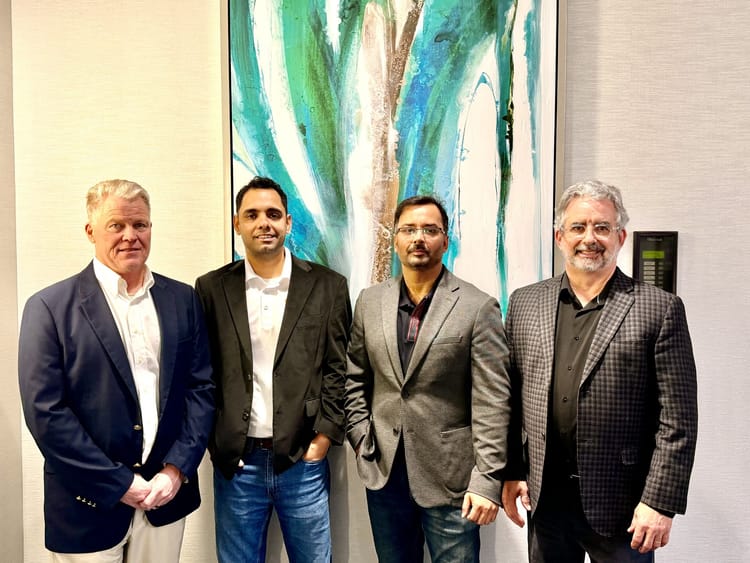
Featured photo Harry Rao (from LinkedIn)



Comments ()