
For CareYaya, Embracing AI Is The Future Of Elderly Care
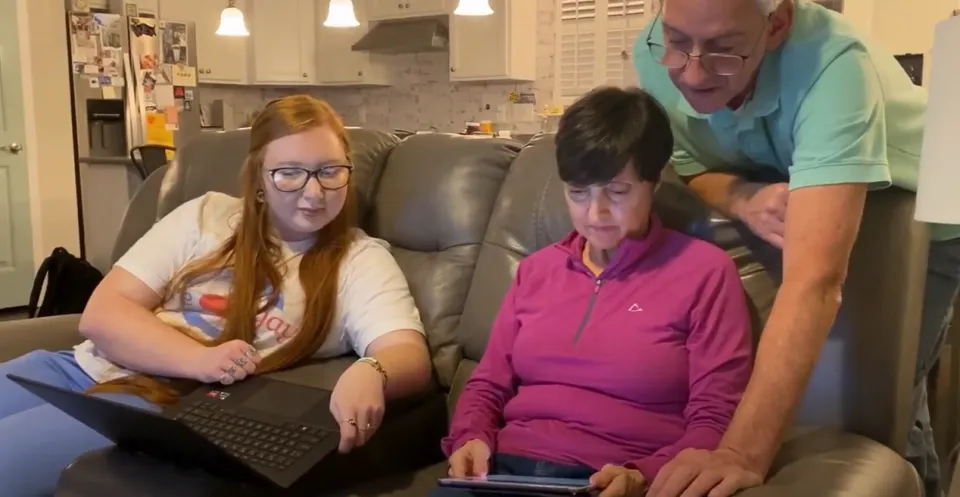
Grandmas are getting into AI, thanks to North Carolina startup CareYaya.
The health tech platform, which connects student caregivers to your elderly loved ones, has a new AI Art Therapy program. The goal is to help those with dementia and memory loss issues create “tailor personalized art” projects, said CEO Neal Shah.
Over six million people in the US have been diagnosed with dementia and Alzheimer’s. These people often struggle with their sleep routines, which can impact their health and add extra strain to their caregivers.
CareYaya student caregivers bring a backlit touchscreen to people with memory loss issues. Users start drawing their own creations, which are ultimately turned into AI masterpieces. Those created images can prompt memories and past connections. It can also help different generations connect and learn from each other.
Even those with limited mobility are able to draw impressive AI images.
“Nighttime can often be difficult for those with dementia, with increased agitation, confusion, and a phenomenon known as "sundowning", where symptoms worsen in the late afternoon and evening,” Shah said. “This therapeutic process helps calm people quickly, reduce anxiety, and get them back to sleep peacefully. Providing caregivers much-needed restful night’s sleep.”
This “guided creative play” is all about “enhancing the overall care and well-being of individuals with dementia,” added Shah.
You can see CareYaya's AI tools in action in this local news report:
Get To Know The Tech
Gavry Eshet, CareYaya’s Chief Technology Officer, said that advances in realtime image generation models (Latent Consistency Models) and text generation models made it possible for CareYaya’s AI Art Therapy platform to come to life.

“Basically, this means that a new breed of interactivity and novelty has been unleashed! People can receive live, personalized generative AI outputs over the internet. Soon, people will be able to construct their own interactive content at the snap of a finger, whether it be art, music, games or video,” Eshet told Hypepotamus.
The CareYaya team started prototyping the AI platform in November and won a grant from Johns Hopkins University to grow. The platform has rolled out in San Francisco through Stanford students and North Carolina through UNC students.
AI and elderly care might not seem like the most natural combination. Many of the AI applications focus on workplace productivity, after all.
But Eshet says that there are huge opportunities when AI enters the elderly healthcare space.
“Machine Learning and AI models are explicitly trained for the purpose of automating traditionally human tasks. Many of these human skills decline as we age. Therefore, the potential for AI's impact to benefit older adults is actually greater. For example, art creation is proven to be a beneficial activity for aging in general and many older adults want to engage in it because they used to create art regularly. Unfortunately, in their older age, many may suffer from limited mobility, hand tremors, reduced eyesight, shortened memory and other barriers to creating art. By providing a tool like AI Art Therapy, we can bridge many of these gaps to make art creation more accessible, impactful and fun for everyone.”
AI In Action
The startup’s care team has already seen tangible results. Just ask recent Emory graduate Nicole Pozzo. She’s working with CareYaya to get the hours she needs to apply to MD/PhD programs. But working with CareYaya is also personal for her.
“I’ve been a direct, part-time caretaker for my grandmother as she ages in place. I’ve seen – firsthand – the stress, personal burnout, and financial difficulties that often manifest when balancing caretaking with professional and personal commitments, family dynamics, etc.,” she told Hypepotamus.
For her, AI helps unleash new levels of creativity.
“It’s always fun to see how AI assisted art therapy can trigger past memories – and new conversations – for care recipients and their care providers! A simple drawing – and telling the story associated with it – can bring welcomed moments of levity for folks experiencing debilitating physical/cognitive health deficits,” Pozzo told Hypepotamus.
Featured photo from the Alzheimer's Caregivers Network


Comments ()