This Founder Is Turning NIL Guesswork Into Data-Driven Deals
Kobi Wu built Cache AI to bring data, transparency, and structure to NIL deals and college athlete valuations.
BIRMINGHAM, April 8 (Hypepotamus) - In 2021, Kobi Wu was one of countless parents of student-athletes watching from the sidelines as her son tried to navigate the newly-changed NIL (name, image, and likeness) landscape.
The NCAA had just adopted its interim name, image, and likeness policy, cracking open a market that had no precedent and, crucially, no standards. What Wu saw wasn't a gold rush. It was a structural failure in real time.
“Billions of dollars were moving through a market with no standard for how to value the people at the center of it. Brands were guessing. Schools were guessing. Athletes were leaving money on the table because nobody could tell them what they were actually worth,” Wu told Hypepotamus. “College sports was being asked to operate like an economy without any of the tools an economy requires.”
Three years later, Wu, a tech entrepreneur with a master's degree from Georgia Tech, founded Cache to build the infrastructure needed to improve NIL deals.

PlayerZero is an AI production engineer that builds a living model of how your software actually works.
What’s In A Deal?
The NIL era promised athletes economic agency. What it delivered, in many cases, fell short of that reality.
NIL deals are comprised of an athlete's performance metrics and trajectory, their social reach and engagement quality, market positioning within their sport and conference, as well as the brand's campaign objectives, exclusivity considerations, usage rights, and duration, Wu explained.
“The problem is that most deals are still being structured on feel,” she added. “Someone sees a highlight reel, they check the follower count, and they make an offer. That's not a deal that's an emotional guess.”
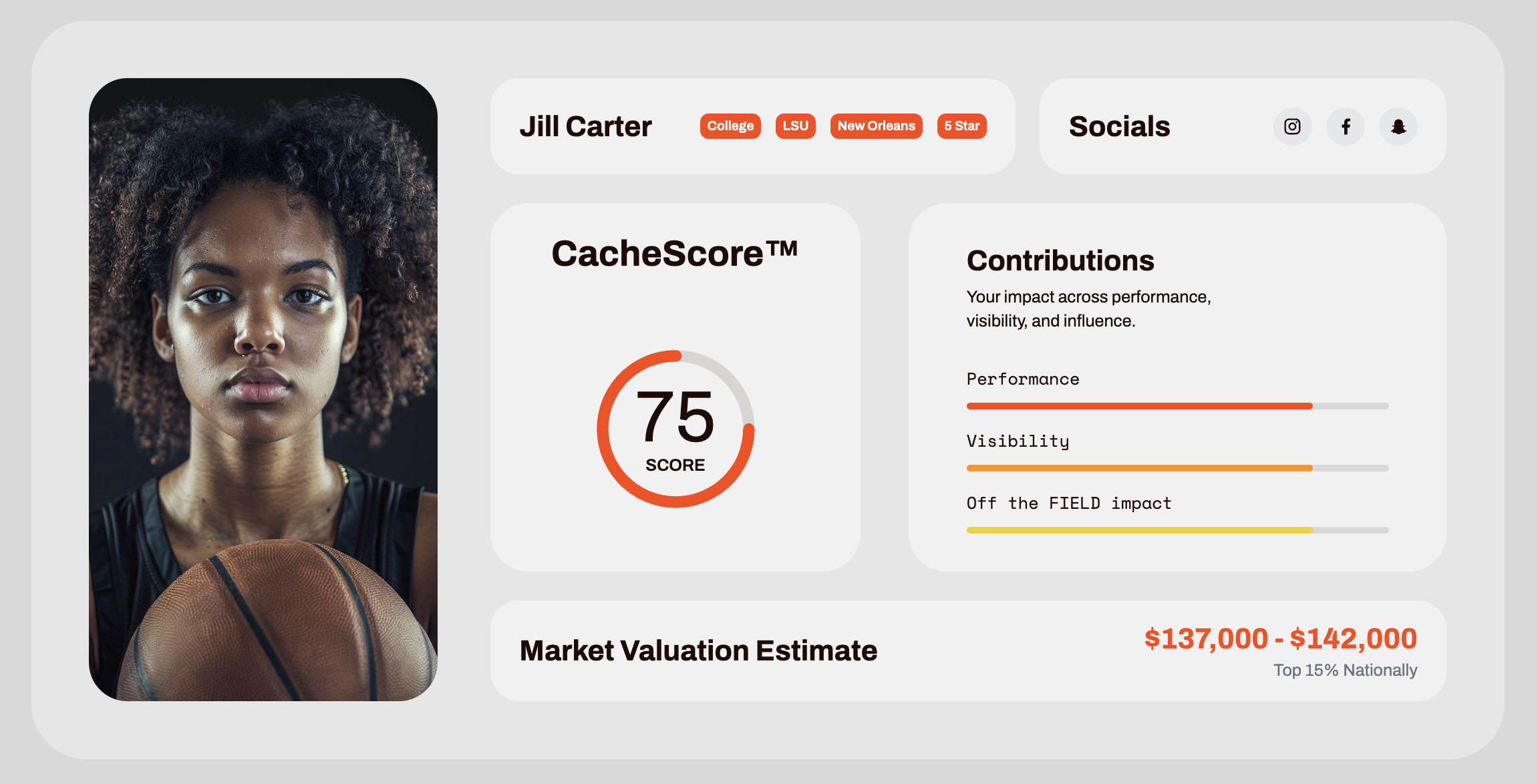
Cache’s CacheScore™ and CacheValue™ puts a "defensible number” behind a deal.
“So when an athlete walks into a negotiation, or when a brand is evaluating a signing, there's a framework underneath it, not a gut call,” she added.
Athletes access the platform for free. Schools, brands, and programs pay to use it for NIL deals, revenue sharing, and sponsorship evaluation.
The platform’s CacheShare™ system is designed to help athletic directors, compliance officers, and finance teams who are now tasked with allocating millions of dollars “with no framework, no precedent, and real legal exposure” if something goes wrong with the deal.
“Schools aren't just buying analytics when they come to us,” she added. “They're buying audit protection.”
Growing Within Collegiate Sports
Unsurprisingly, football and men’s basketball dominate NIL deal volume today.
"Our value isn't tied to which sport is hottest right now," Wu added. “We're evaluating infrastructure. Our growth follows institutional adoption, schools, athletic departments, brands that need a methodology across their entire portfolio, not just their marquee programs.”
The platform now counts more than 66,000 athletes and partnerships across 19 universities (including Columbia to Alabama State, Alabama A&M, and Howard) with conferences beginning to explore it as well for broader revenue-sharing and sponsorship models.
Building In Birmingham
While Cache AI got off the ground in New York City, Birmingham, Alabama has directly impacted the trajectory of the company early on.
Wu and Cache AI joined the Bronze Valley Investment Accelerator, powered by gener8tor, which initially brought her to the city.
“Once I was in the ecosystem, I saw immediately what the numbers couldn't fully capture. Birmingham sits in the middle of one of the most athletically rich regions in the country. HBCUs, SEC programs, deep high school talent pipelines. The culture around athletics here is serious and generational,” Wu added. “But here's what struck me: all of that talent, all of that infrastructure and almost none of the support and resources that markets like this deserve. College sports are everywhere here. The valuation tools to support it were nowhere. That's not a gap. That's an untapped opportunity hiding in plain sight.”
“We're not here because Birmingham was convenient. We're here because it's right. The athletes and institutions we're building for are right here and for the first time, so are we.”
Wu is raising a pre-seed round after bootstrapping the early stages of Cache. Funding will go towards accelerating hiring.-Featured photo from Cache AI's LinkedIn page