
Automated Laboratory Technologies Lets Scientists Multitask
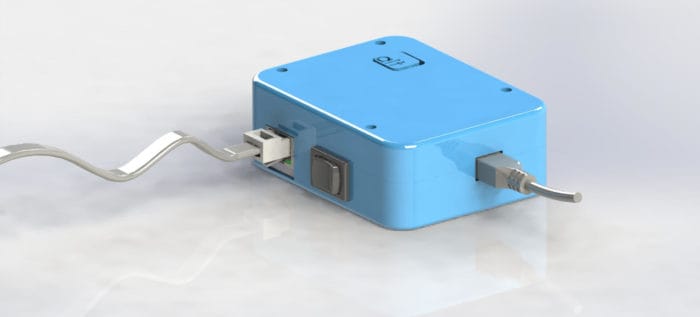
Conducting science experiments is a hands-on process, from keeping track of specimens to making sure all environmental factors remain stable. Often, scientists and researchers need to babysit their experiment for hours to make sure nothing goes wrong. But, this environment prevents them from being as productive as they could be.
Tony Hoang witnessed this in an unexpected setting — a college party. While finishing his Ph.D in Chemistry in 2017, Hoang saw his peers set timers on their cellphones and leave the party to check on experiments.
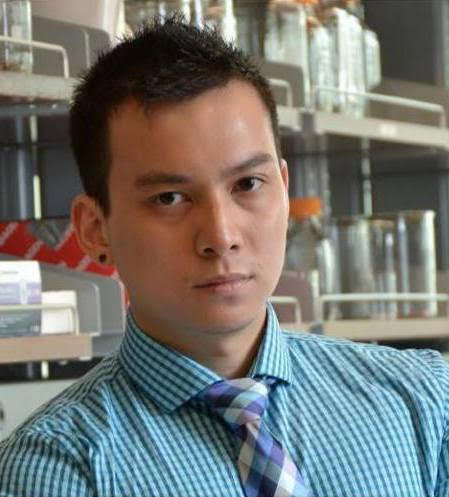
"It was crazy," says Hoang. ""That's when I thought about putting sensors inside scientific experiments to monitor data."
Hoang founded Automated Laboratory Technologies (ALT) to build on that idea and provide researchers with a turnkey sensor solution to monitor experiments from anywhere.
The IoT sensors use AI and machine learning to monitor experiment progress, predict completion times, and get a heads up on any equipment failures.
"Scientists now can easily plug-and-play different sensors, depending on their experiment, and control everything from their smartphone. This way, they can have different experiments going on at once," says Hoang.
Researchers can easily connect camera equipment to keep track of samples and monitor cell growth. They can also set the system to be alerted of temperature changes or gas leaks. The researcher is also able to set their own specific user-defined thresholds for customizable alerts.
"Rather than running one experiment and having to sit there for over an hour, they can run 20 to 30 experiments all simultaneously and focus on other tasks," says Hoang.
Hoang explains how ALT devices can also be a tracking tool, as lab supervisors often have a hard time tracking hours and tasks throughout the day. Acting as trackers, the sensor data can help supervisors optimize the workflow of the scientists.

Automated Laboratory Technologies' go-to market strategy is a unique one. They've partnered with The Arc, a New York-based organization that works with individuals with intellectual and developmental disabilities, to find workers to assemble the sensors.
"I've done a lot of philanthropy since grad school. I've previously worked with the Boys and Girls Club to create a STEM-focused educational series for them. I saw this as a way to work with people with disabilities," says Hoang.
Hoang's target customer is state agencies, who can purchase the sensors in bulk for researchers and laboratories.
The Atlanta-based startup is conducting a pilot with the NASA Center for the Origin of Life, which runs experiments to mimic life on different planets.
The team is actively raising about $1 million in capital right now. The funds will be used to finish manufacturing, continue product development, and push customer acquisition.

Comments ()