
Atlanta Startup Quency Wants You To See Ultrasounds Differently — With AR

What’s in an image?
When it comes specifically to ultrasound images, often not much. The traditional 2D ultrasound (the ones expecting parents might get during their pregnancy), are painfully hard to interpret, even for healthcare professionals.
But what if viewing those ultrasounds could be an immersive experience?
That’s what a new Atlanta-based startup Quency, founded by Emory and Georgia Tech students and recent graduates, is looking to bring such images to life. Quency brings an immersive AR (augmented reality) experience to 3D and 4D viewing.
From a technological perspective, Quency’s AR goggles and the platform’s “software allows medical practitioners to better understand and utilize the vast amount of ultrasound data their existing systems are capable of generating,” making it “far more interpretable for physicians, improving their diagnostic capabilities, and potentially,” said co-founder and recent computer science graduate from Emory University Yujin Kwon.

But Quency is also unique because it is a cost-efficient way to improve modern ultrasound images and is an easy way to make ultrasound appointments “more comfortable and interactive,” Kwon told Hypepotamus.
The startup is also looking to improve the patient-doctor relationship.
“Quency is making ultrasound far more interpretable for physicians, improving their diagnostic capabilities, and potentially improving patient outcomes. Additionally, it improves patient-doctor communication by giving physicians a tool that allows patients to understand their ultrasound images better, making them feel like a more informed part of the medical process,” Kwon added.
Quency’s Atlanta Story
Quency’s story to date is an Atlanta story. Kwon is building Quency alongside Victor Pan (PhD, Bioengineering at Georgia Tech/ Emory), Ian Heaven (MS in Electrical Engineering & Computer Engineering at Georgia Tech), and Stephan Strassle Rojas (PhD, Electrical Engineering & Computer Engineering at Georgia Tech). Kwon and Heaven serve as the core programmers and are responsible for Quency’s AI and AR components.
The team has known each other for years, with Heaven and Rojas connecting at Georgia Tech’s makerspace and Heaven, Pan, and Kwon meeting originally through Emory University’s Breakdancing Club.
“We often spend time together in person to work on Quency, play video games, and breakdance whenever we can,” Kwon added.
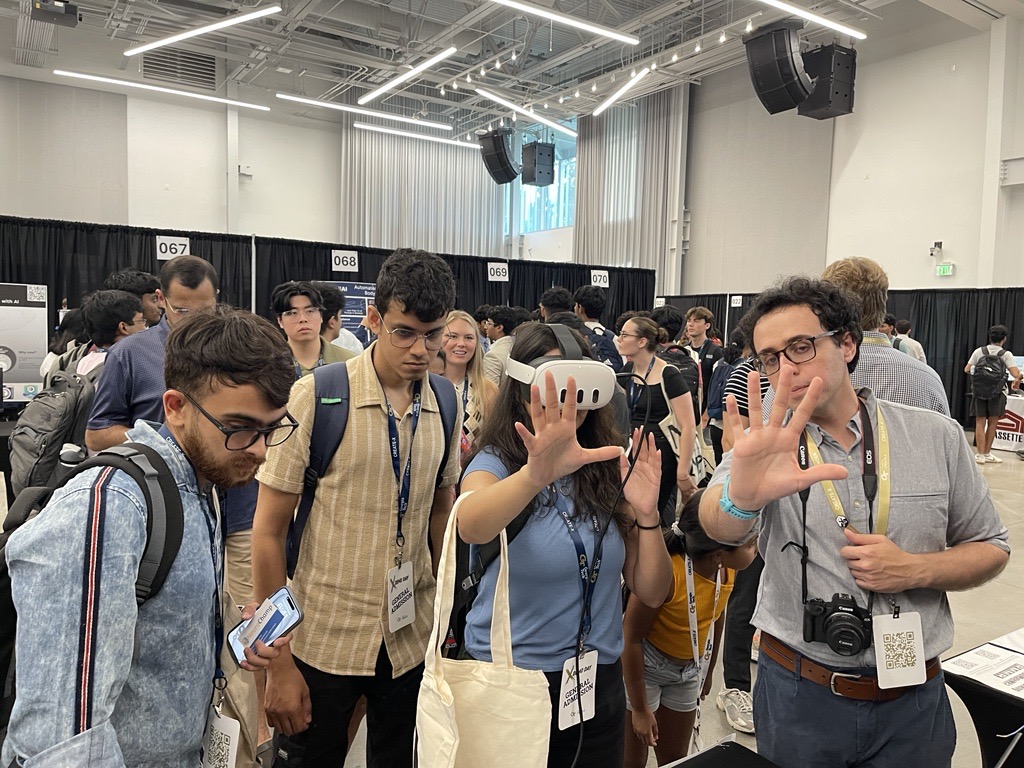
The co-founders were first exposed to ultrasound technology through Emory’s and Georgia Tech’s joint Biomedical Engineering department, one of the top programs of its kind in the country. To launch, Quency was one of 25 startups that went through Emory’s incubator program at The Hatchery, the school’s center for student innovators and entrepreneurs, during the 2024/2025 academic year. The team was also part of Create-X, Georgia Tech’s student startup program, last summer.
Quency, which borrows its name from the high-frequency sound waves used in ultrasound imaging, is currently looking to raise a $120k pre-seed round.
-
Photos provided by Quency




Comments ()