
This Nashville Startup Is Protecting Kids Online with Smarter, Safer AI
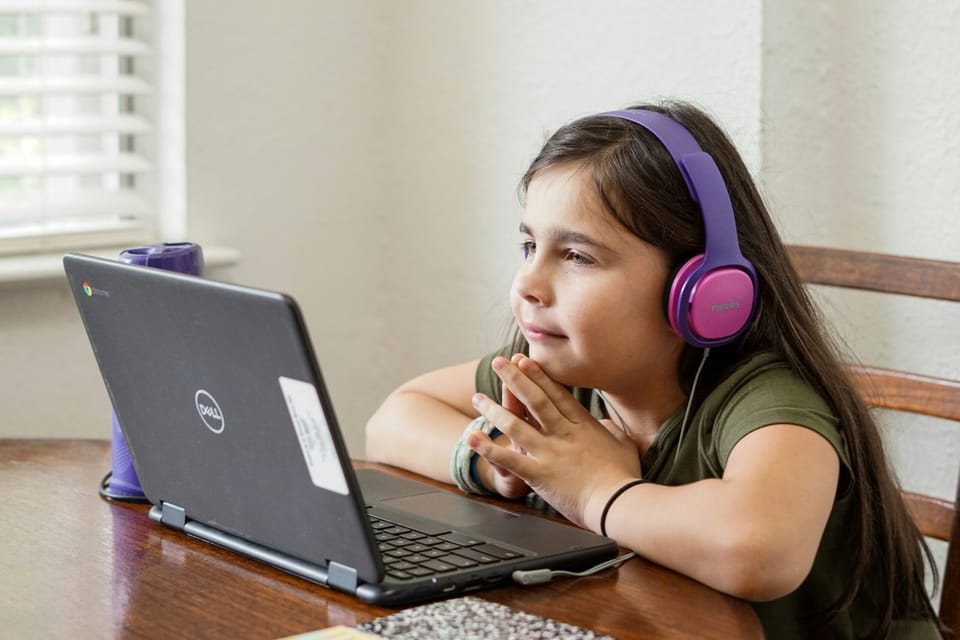
Nashville-based Angel Q (previously known as Angel Kids AI), got its start building a safer browser option for kids to access the internet.
But browsers are not the only way of searching for information in 2025, as people are increasingly turning to LLMs and different AI platforms to answer their search queries. Those platforms weren’t built with kids in mind…so Angel Q and its partner San Francisco-based Arcee AI are bringing one that is to market.
KidRails for LLMs, the open-sourced platform Angel Q and Arcee AI announced publicly today, is “fine-tuned” to provide age-appropriate responses to children’s questions.
The goal is to create “safe, transparent, and responsible artificial intelligence (AI) interactions for children aged 5-12,” according to a press release.
The KidRails’ model provides age-appropriate answers, answers those questions with deference (and suggests kids to turn to parents when further guidance is needed), and alerts parents when an inappropriate question is raised.
Building Kid-Safe AI

Tim Estes, CEO and Co-Founder of Angel Q, said that he first connected with the Arcee AI team at the beginning of 2024.
“From our very first conversation, it was immediately apparent that we shared a fundamental belief: technology for children was very important and there was an opportunity to do innovative work in making Language Models safer and more age appropriate in their function. Arcee’s deep expertise on fine tuning and customizing open language models combined with our safety and deep AI experience made for a natural team to accomplish this,” Estes told Hypepotamus.
Arcee AI, a venture-backed startup founded in 2023, provides small language models (SLMs) and custom AI workflows for companies.
“Creating truly child-safe AI requires a deep understanding of developmental psychology and education. We had to design a system that could dynamically adapt its responses based on a child's cognitive and emotional development stage. A six-year-old and an eleven-year-old don't just process information differently, they have entirely different needs, interests, and safeguards required,” Estes said. “KidRails was engineered from the ground up to recognize these crucial differences and adjust its interactions accordingly, ensuring every response is developmentally appropriate and enriching.”
“Perhaps most importantly, we recognized that building truly child-first technology means empowering parents as active partners in their children's digital journey. For instance, when faced with sensitive or inappropriate questions, our system doesn't attempt to navigate these waters, but rather it creates opportunities for parent-child discussions by redirecting these questions to parents,” he added. “Sometimes the best approach for AI is to know when not to say something.”
Estes said he hopes kids will use KidRails as a way to explore their digital world.
“We want children to be able to explore and learn in an environment that preserves the natural curiosity and wonder of childhood, while giving parents the confidence that comes from knowing their children are engaging with technology built specifically for them… not adapted adult technology with safety filters added as an afterthought,” Estes added. “This is how we believe AI should be built for kids, and we hope it inspires a broader movement toward truly child-first technology development.”
--Featured photo from Unsplash


Comments ()