
Africa Is Taking Charge of Its Fintech Future — and Inviting Atlanta to Partner
Editor’s note: This article was first published in Global Atlanta, an online news publication devoted to revealing the city’s ties with the world and helping local companies navigate the global economy. It was written by Managing Editor Trevor Williams and is published here as part of a content partnership with Hype. Subscribe to Global Atlanta’s newsletters here and keep up with the latest here.
No longer intent to inherit solutions from Western powers, Africa is developing financial technology solutions to drive economic empowerment, and it’s inviting investors to join in on the opportunity — or miss the boat.
With the right regulatory frameworks and cross-border collaboration, the continent of 54 countries and a billion people is looking to unlock new avenues for growth as it leapfrogs outdated legacy banking systems from developed countries.
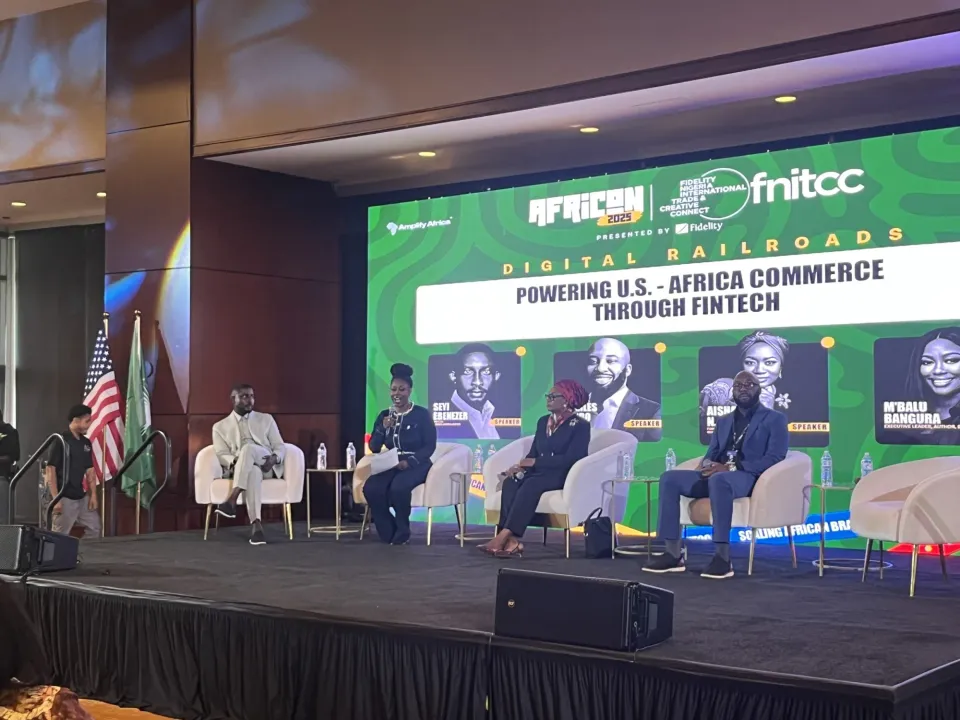
“If you look at financial systems like Nigeria, they are arguably, I would say, more evolved than here,” said Aishah Ahmad, former deputy governor of the Central Bank of Nigeria, said at the crowded AFRICON conference the Omni Hotel Sept. 20.
An advocate for financial inclusion through innovation, Ms. Ahmad said virtual banks, mobile payments and chatbots are taking off in Africa, even as they have been slow to take root in the U.S. Mobile payments innovator M-Pesa, for instance, took Kenya by storm more nearly a decade before Apple Pay became a viable option for most mobile users in the U.S.
“That’s because of the young population that’s young, tech-savvy and anglophone,” Ms. Ahmad said, inviting Georgia’s massive payments companies, which account for more than 30,000 jobs in the state, to shift their minds toward “co-creating” a future with Africa. “Look at it more as a land of opportunity and great ideas.”
Ms. Ahmad stressed the need for strong regulatory environments in Africa that can engender trust from international investors, driving interest and participation that will lead to increased transparency among stakeholders.
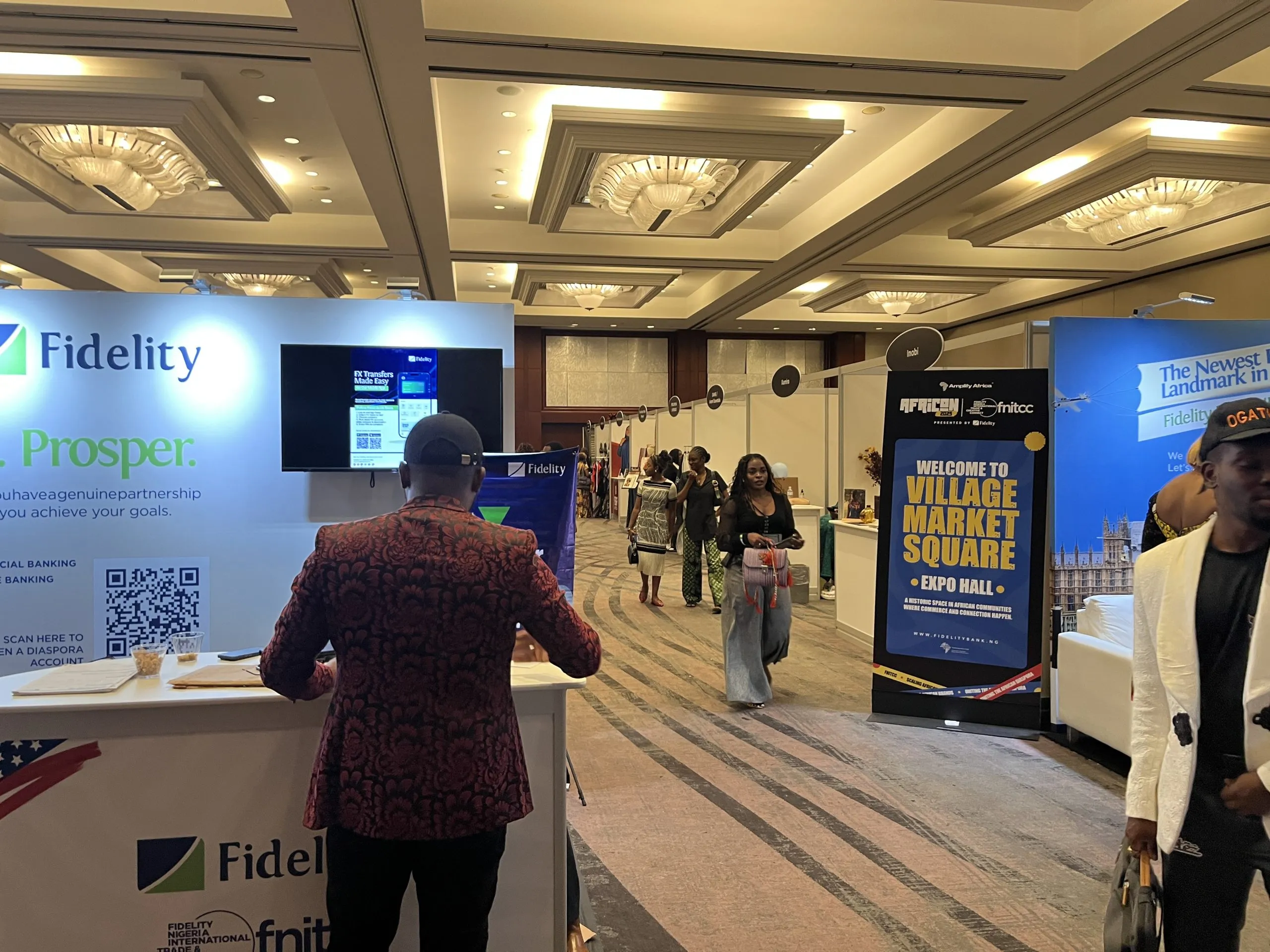
While many solutions have focused on linking African economies to international financial infrastructure, more could be done to connect countries with one another, experts said at the event, held concurrently with the Fidelity Nigeria International Trade & Creative Connect.
Across Africa, intra-continental trade has traditionally been weak, with remittances from abroad constituting a key source of economic growth. But younger people are tiring of accepting a 20th-century Western status quo as they experience 21st-century African demands.
Payaza Africa CEO Seyi Ebenezer said the credit ratings from Western countries, for instance, are ill-suited to African realities, and banks need new ways to underwrite borrowers.
“We should tell our own stories ourselves,” Mr. Ebenezer said, who is building tools like small-business loans, international tuition payments and cross-border payments on top of its payment acceptance infrastructure across Kenya, Ghana and Nigeria. Integrity, Mr. Ebenezer said, is the foundational principle of building a financial ecosystem, he added, and the quicker companies realize that “regulators are your friend,” the healthier African banks and s will be.
Houston-based Sawport’s Charles Oligbo agreed, noting that the software company is creating virtual bank branches that are subject to the compliance regulations encumbering their customers back in Africa. Fidelity Bank, the sponsor of AFRICON, is a leader in seeing the potential in banking the Nigerian diaspora back home, Mr. Oligbo said. But serving Fidelity in Nigeria and banks in Rwanda requires different licenses, he said.
In an ideal world, Mr. Oligbo said, African countries would band together to craft trans-continental banking and regulatory sandbox that would enable companies to more easily test new technologies for multiple markets, instead of figuring out ways to “passport” their licenses across jurisdictions.
What the African Continental Free Trade Area aims to do for goods, tech innovators are hoping to see in banking regulations for tech services.
“How is that possible? I’m not sure, but I think we’re going to get there,” Mr. Oligbo said, adding that the fintech scene in Africa should move beyond a focus on payments to other services like lending, credit scoring, insurance and more.
Ms. Ahmad, similarly, believes interoperability, data portability and data protection are vital, as is rethinking outmoded systems that weren’t created with African conditions in mind.
“Some of these legacy systems have not been inclusive by design,” she said.
PadiePay, an exhibitor at the conference, has created a platform that blends established trends with a distinctly African model. Much like Klarna or AfterPay help shoppers “buy now, pay later,” PadiePay helps diaspora members send money to relatives and friends before they have it in hand.
This blend of lending and remittance helps unlock more cash, more quickly, tapping into to the wealth that diaspora members are creating by working abroad, said Toyin Felipe, PadiePay’s co-founder.
“It all also about the social impact. We are impacting the continent in a positive way, and nobody else is doing it right now,” he said.
BoraBond envisions a similar impact for its platform, which enables individual investors to put as little as $100 into African government bonds, helping bridge the $100 billion infrastructure funding gap back home while earning higher returns than in most developed markets.
Perhaps anticipating the argument that these yields reflect higher risks, the company points out that there have been only 25 instances of default in the last 50 years, most of them evolving into restructurings.
“This isn’t charity. These bonds fund the building blocks of growth: schools, hospitals, roads. They’re transparent, regulated, and offer competitive yields,” Kalule Guwatudde, the company’s founder, said in a recent LinkedIn post noting that Wall Street investors’ have long diversified their portfolios in Africa. Why shouldn’t the very Africans whose futures are tied up with the continent’s development be able to join in funding it? (Remittances sent back to Africa from around the world, he pointed out, match almost perfectly the shortfall in funds for building roads, bridges and ports).
On a panel focused more on entrepreneurial lessons than fintech, Mr. Guwatudde, a serial entrepreneur and McKinsey alum, said he tries to take a realistic view of risk that comes from a place of confidence.
“I let my actions be inspired by my hopes, not my fears,” he counseled the audience.
That might as well have been the rallying cry for a Friday-afternoon discussion that sought to inspire perseverance in prospective founders while underscoring the unsung opportunities in Africa.
Thabiti Stephens’s experience taking the classic game show “Family Feud” into Africa was an object lesson, he said. After two years of self-funding Atlanta-based Steve Harvey Global found distributors — and success — in markets including South Africa, Botswana and Ghana.
“No one believed in the opportunity, and now Africa is the hottest thing on our business blueprint.”
The event attracted a variety of foreign and local officials including Georgia state legislators, Atlanta Mayor Andre Dickens and Gov. Babajide Sanwo-Olu from Nigeria’s Lagos state. The city of Lagos is a sister-city with Atlanta, and Nigeria is the only African country with a career consulate here.



Comments ()